Centre for Education Statistics and Evaluation (NSW)
Centre for Education Statistics and Evaluation (NSW) · Practice guide · Australia
How learning happens
Jamie ClarkJamie Clark · One-page guide · Australia
Explains working memory, long-term memory and schemas, then offers six ways to plan instruction that avoids overload. Draws on the NSW CESE classroom practice guide.
How learning happensExplicit instruction
AERO
AERO · Research summary · 2023 · Australia
How learning happens
Daniel WillinghamDaniel Willingham · Article · 2021 · USA
How learning happens
Jamie ClarkJamie Clark · One-page guide · Australia
Shows how to design slides and handouts that cut clutter, keep information visible and keep related material together, with short subject examples for each cognitive load effect.
How learning happensExplicit instruction
Ambition Institute (Peps Mccrea)
Ambition Institute (Peps Mccrea) · Paper · UK
How learning happens
Centre for Education Statistics and Evaluation (NSW)
Centre for Education Statistics and Evaluation (NSW) · Research summary · 2017 · Australia
How learning happens
Deans for ImpactDeans for Impact · Research summary · 2026 · USA
How learning happens
Slava Kalyuga
Slava Kalyuga · Article · UK
How learning happens
Martin Ravindran, Journal of Think Forward EducatorsMartin Ravindran, Journal of Think Forward Educators · Journal article (PDF) · 2024 · Australia
A brief teacher-written introduction to cognitive load theory by Martin Ravindran, suitable as pre-reading for a staff session.
How learning happens
Susan Gathercole and Tracy Packiam AllowaySusan Gathercole and Tracy Packiam Alloway · Guide · 2007 · UK
A classroom guide to working memory by researchers Susan Gathercole and Tracy Packiam Alloway, hosted by the University of Cambridge. Older, but still a well-known introduction for teachers.
How learning happensTiered support and inclusionLearning difficulties, disorders and additional needs
Minding the Gap
 Natalie Wexler (Minding the Gap) · Substack · 2024 · USA
Wexler introduces Graham Nuthall's research on what students actually learn in class, including his finding that students typically need to meet a concept several times before it sticks.
How learning happensChecking for understanding and responsive teaching
No More Marking
 Daisy Christodoulou (No More Marking) · Substack · 2025 · UK
Starting with her grandmother's mental arithmetic, Christodoulou asks whether technology lets us skip the practice that builds knowledge and skill, and why schools need to keep those cognitive muscles working.
How learning happensRetrieval, spacing and review
Doug Lemov's Field Notes Doug Lemov (Doug Lemov's Field Notes) · Substack · 2026 · USA
Lemov shares notes on Daniel Willingham's explanation of why stories are easier to understand and remember, and what that means for how teachers structure explanations and use shared stories.
How learning happensExplicit instruction
Paul Kirschner
 Paul Kirschner · Substack · 2025 · International
A clear explainer on the limits of working memory and how schemas and chunking let learners hold and use more, with implications for how teachers sequence and present new material.
How learning happens
Jamie ClarkJamie Clark · One-page guide · Australia
Distils Daniel Willingham's account of how thinking and memory work, and what that means for planning lessons that make students think hard about the right things.
How learning happens
AERO
AERO · Research summaries and explainers · Australia
How learning happens
Daniel Willingham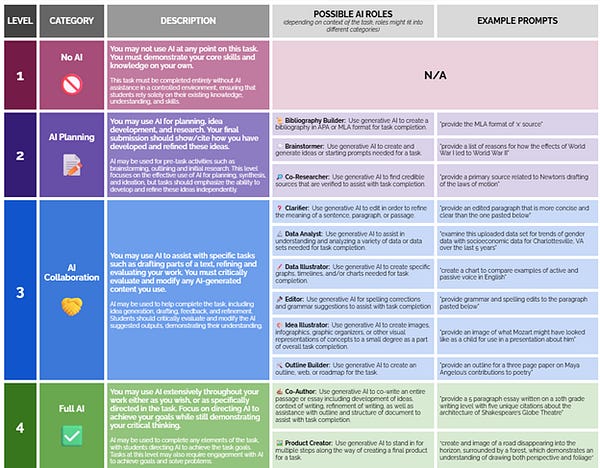
 Daniel Willingham · Substack · 2026 · USA
Willingham proposes a guiding rule for school AI policies, that students should only use AI for tasks they can already do well, so the tools do not replace important thinking.
How learning happensEvidence, myths and debates
Centre for Education Statistics and Evaluation (NSW)
Centre for Education Statistics and Evaluation (NSW) · One-page summary · 2017 · Australia
How learning happens
Jamie ClarkJamie Clark · One-page guide · Australia
Explains why students remember what they produce themselves, and offers five classroom moves for sequencing AI use so it does not take over the thinking students need to do.
How learning happensMotivation, self-efficacy and metacognition
The Learning Dispatch
 Carl Hendrick (The Learning Dispatch) · Substack · 2026 · UK
Hendrick reviews new evidence that growth mindset interventions do little for achievement on their own, and argues that real success through effective practice is what builds students' belief in themselves.
Motivation, self-efficacy and metacognitionEvidence, myths and debates
On Education
 Rebecca Birch (On Education) · Substack · 2026 · Australia
Birch questions the hunt for intrinsic motivation in school subjects and describes realistic alternatives, such as teacher enthusiasm, clear rationales and success, that support students' effort and learning.
Motivation, self-efficacy and metacognitionClassroom culture, routines and attention
Minding the Gap
Natalie Wexler (Minding the Gap) · Substack · 2025 · USA
Wexler argues that motivation tends to follow achievement, so clear teaching that lets students succeed is a more reliable way to motivate them than choice, relevance or rewards.
Motivation, self-efficacy and metacognitionExplicit instruction
No More Marking
Daisy Christodoulou (No More Marking) · Substack · 2026 · UK
Christodoulou explains why tailoring lessons to students' interests rarely improves learning, and warns that arguments for personalisation often promise better pacing but deliver isolated screen time.
Motivation, self-efficacy and metacognitionEvidence, myths and debates
Jamie ClarkJamie Clark · Poster · Australia
An A3 poster on retrieval practice, spacing, interleaving, dual coding and elaboration, explaining why and how to use each. Suitable to share with secondary students and families.
Motivation, self-efficacy and metacognitionRetrieval, spacing and review
On Education
Rebecca Birch (On Education) · Substack · 2025 · Australia
Using her own fear of flying, Birch argues that school accommodations for anxiety can reinforce avoidance, and that participation and low-stakes testing better support students' competence and belonging.
Motivation, self-efficacy and metacognitionSchool culture, trust and behaviourTiered support and inclusion
The Learning Dispatch
Carl Hendrick (The Learning Dispatch) · Substack · 2025 · UK
Hendrick distils Engelmann and Carnine's Theory of Instruction into ten design rules about examples, boundaries and sequencing, showing how careful instructional design helps every student form concepts, not only the strongest.
Explicit instructionKnowledge-rich curriculum and coherence
Jamie ClarkJamie Clark · One-page guide · Australia
A one-page summary of Rosenshine's ten research-based principles, set alongside a simple model of memory. Handy for a staff meeting refresher or for new teachers learning the lesson cycle.
Explicit instructionRetrieval, spacing and review
Filling the Pail
 Greg Ashman (Filling the Pail) · Substack · 2024 · Australia
Written as Australian governments fund evidence-informed reform, Ashman sets out a working definition of explicit teaching, how it works within a lesson and across a sequence, and which versions the evidence supports.
Explicit instructionEvidence, myths and debates
On Education
Rebecca Birch (On Education) · Substack · 2025 · Australia
Drawing on her doctoral literature review, Birch sets out research linking explicit teaching with better student behaviour and other non-academic outcomes, and argues that academic success underpins wellbeing.
Explicit instructionSchool culture, trust and behaviourClassroom culture, routines and attention
WAGOLL Teaching
 Ben Cooper (WAGOLL Teaching) · Substack · 2026 · UK
A primary lesson recount showing dual coding used properly, with words, diagrams and gesture working together rather than decorative icons on slides.
Explicit instructionHow learning happens
Centre for Education Statistics and Evaluation (NSW)
Centre for Education Statistics and Evaluation (NSW) · Evidence guide · Australia
Explicit instruction
Dr Nathaniel Swain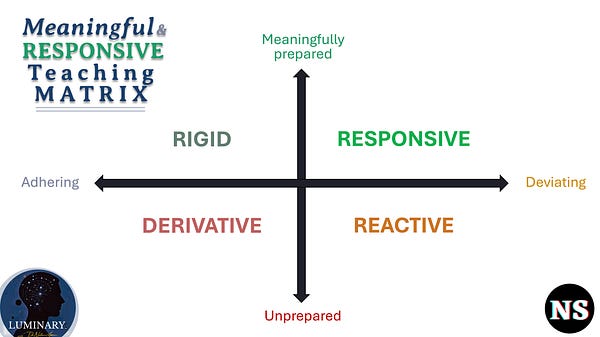
 Nathaniel Swain · Substack · 2026 · Australia
Swain offers a simple matrix of preparation and deviation to show why expert teaching is neither rigid script-reading nor improvisation, and why responsive teaching depends on thorough preparation.
Explicit instructionChecking for understanding and responsive teaching
Tips for Teachers Craig Barton (Tips for Teachers) · Substack · 2024 · UK
Using two versions of a maths explanation, Barton shows how to plan explanations that are clear and free of clutter, and how checking students were listening reveals whether an explanation worked.
Explicit instructionExplicit teaching in maths
Publican Policy
 Trisha Jha (Publican Policy) · Substack · 2026 · Australia
A summary of new Australian research surveying teachers on what they know and do about explicit teaching, with replies to common criticisms of the findings.
Explicit instructionEvidence, myths and debates
Shaun Brien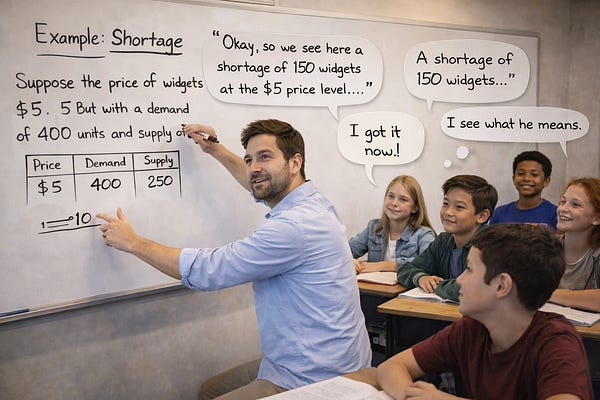
Shaun Brien · Substack · 2026 · Australia
Explains why novices need expert thinking made visible, and how worked examples and think-alouds help, with an example video made for a class.
Explicit instruction
Jamie ClarkJamie Clark · One-page guide · Australia
Summarises Anita Archer and Charles Hughes's model, including the lesson opening, body and closing and the input, question, response, monitor and feedback cycle.
Explicit instructionParticipation and opportunities to respond
AEROAERO · Guides and explainers · Australia
Explicit instruction
NSW Department of EducationNSW Department of Education · PL workshops and technique guides · Australia
Explicit instruction
The Science of Learning
 Nidhi Sachdeva and Jim Hewitt (The Science of Learning) · Substack · 2025 · International
Explicit instruction
Department of Education, VictoriaDepartment of Education, Victoria · Policy · Australia
Explicit instructionInstructional leadership
Tes
Tes · News report · UK
Explicit instruction
Teach Like a Champion (Doug Lemov)
Teach Like a Champion (Doug Lemov) · Blog series · USA
Explicit instruction
Coe, Rauch, Kime and Singleton (Evidence Based Education)
Coe, Rauch, Kime and Singleton (Evidence Based Education) · Evidence review · 2020 · UK
Explicit instruction
The Learning Dispatch
Carl Hendrick (The Learning Dispatch) · Substack · 2026 · UK
Hendrick argues that minimally guided discovery learning shifts the work onto students and favours those who arrive with advantages, making explicit instructional design the more progressive and equitable choice.
Explicit instructionEvidence, myths and debates
Filling the PailGreg Ashman (Filling the Pail) · Substack · 2025 · Australia
The first in a series preparing teachers for common objections. Ashman examines the claim that explicit teaching only builds rote recall, drawing on empirical evidence and theory about understanding.
Explicit instructionEvidence, myths and debates
Filling the PailGreg Ashman (Filling the Pail) · Substack · 2025 · Australia
Ashman tackles the claim that explicit teaching stifles creativity and higher-order thinking, tracing the idea to readings of Bloom's taxonomy and arguing for the whole explicit teaching process instead.
Explicit instructionEvidence, myths and debates
Filling the PailGreg Ashman (Filling the Pail) · Substack · 2025 · Australia
Ashman takes on the claim that explicit teaching kills teacher creativity and autonomy, arguing that constraint can free creativity and that shared lesson plans leave room to refine one thing well.
Explicit instructionInstructional coaching and professional learning
Filling the PailGreg Ashman (Filling the Pail) · Substack · 2025 · Australia
Ashman responds to the objection that explicit teaching ignores individual differences, questioning differentiation as a cure-all and explaining which differences between students really matter for instruction.
Explicit instructionTiered support and inclusion
Filling the PailGreg Ashman (Filling the Pail) · Substack · 2025 · Australia
The last in Ashman's series takes on the claim that explicit teaching kills motivation, arguing from experience and research that early success through clear instruction is what motivates learners.
Explicit instructionMotivation, self-efficacy and metacognition
On Education
Rebecca Birch (On Education) · Substack · 2026 · Australia
Birch explains how new research on prior knowledge and the expertise reversal effect has partly changed her view on whether gifted learners always need explicit teaching before problem solving.
Explicit instructionTiered support and inclusionHow learning happens
Dr Haili Hughes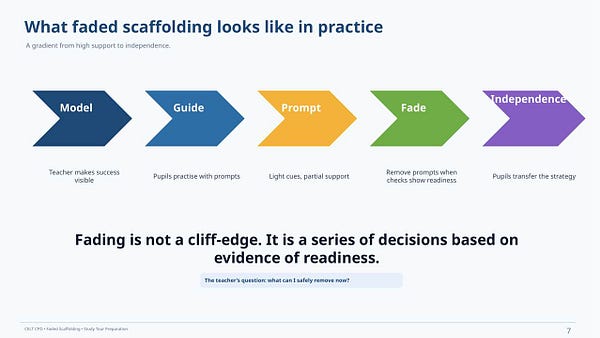
 Haili Hughes · Substack · 2026 · Australia
Hughes explains how scaffolds such as sentence starters and writing frames should be temporary and targeted, keeping tasks ambitious and gradually removed as students show they are ready.
Explicit instructionWriting
Jamie ClarkJamie Clark · One-page guide · Australia
Sets out why fully guided instruction beats minimal guidance for novices, drawing on Kirschner, Sweller and Clark, and shows the I do, we do, you do sequence with fading.
Explicit instructionEvidence, myths and debates
Jamie Clark (DistillED)
Jamie Clark (DistillED) · Newsletter article · 2026 · Australia
Brings together the ten principles, grouped into Tom Sherrington's four strands, with explanations of why they matter and how they look in practice.
Explicit instructionRetrieval, spacing and review
Paul KirschnerPaul Kirschner · Substack · 2026 · International
Kirschner questions failure-first lesson designs, arguing that struggle before students have the knowledge to make sense of it is rarely a desirable difficulty, and that support should come first.
Explicit instructionHow learning happensEvidence, myths and debates
Curriculum 101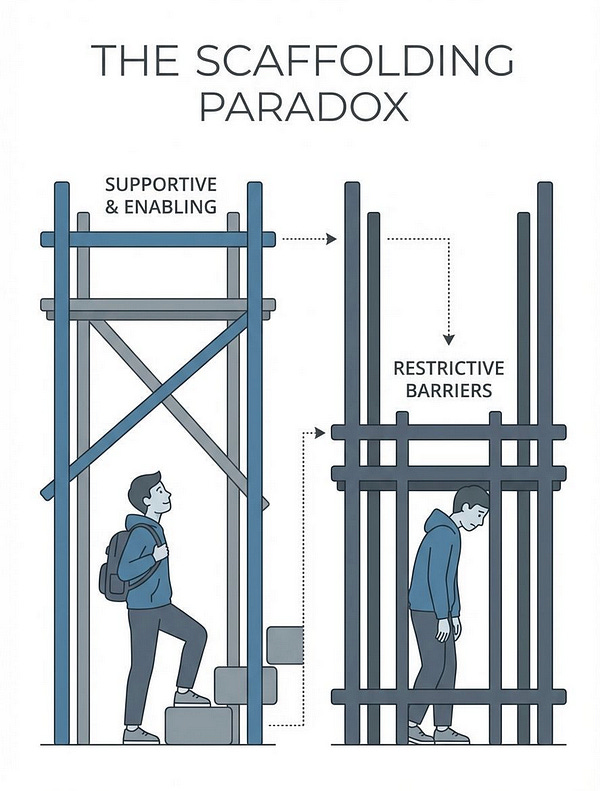
 Mary Myatt (Curriculum 101) · Substack · 2026 · UK
Myatt asks whether sentence starters and talk frames can become a ceiling rather than a launch pad, and how teachers can push for fuller, more thoughtful answers.
Explicit instructionOral language
Kylie Hoey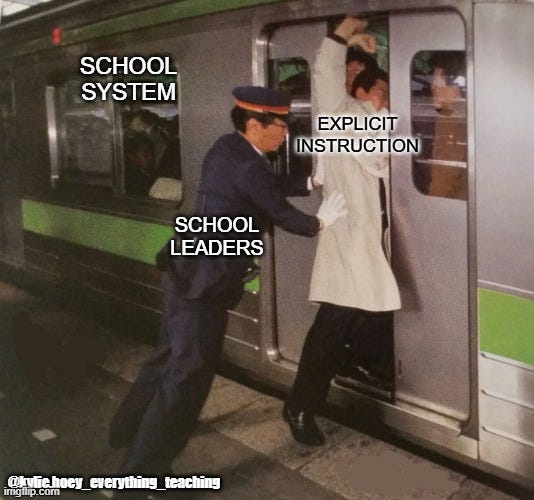
 Kylie Hoey · Substack · 2026 · Australia
Warns that many schools claiming explicit instruction deliver little more than slide-heavy lessons, and explains what the approach actually involves when it is done well.
Explicit instructionImplementation
WAGOLL Teaching
Ben Cooper (WAGOLL Teaching) · Substack · 2025 · UK
The first in a series on task design, explaining how tasks such as comparing, sequencing and chunking help primary children organise knowledge so it sticks.
Explicit instructionHow learning happens
Jamie ClarkJamie Clark · One-page guide · Australia
Summarises Hollingsworth and Ybarra's lesson design, from learning objective to periodic review, with student engagement norms such as choral reading, pair-shares and whiteboards.
Explicit instructionParticipation and opportunities to respond
Centre for Education Statistics and Evaluation (NSW)Centre for Education Statistics and Evaluation (NSW) · Illustration of practice · Australia
Explicit instructionImplementation
Dr Nathaniel Swain
Nathaniel Swain · Substack · 2026 · Australia
Swain answers the claim that explicit teaching produces passive learners. He shows how building secure foundations first lets students generate and apply ideas, so knowledge becomes something to think with.
Explicit instructionHow learning happens
Tips for TeachersCraig Barton (Tips for Teachers) · Substack · 2026 · UK
Barton breaks down a meta-analysis of classroom experiments on adding pictures and diagrams to explanations, including where visuals helped most and how to use them well.
Explicit instructionHow learning happens
Publican Policy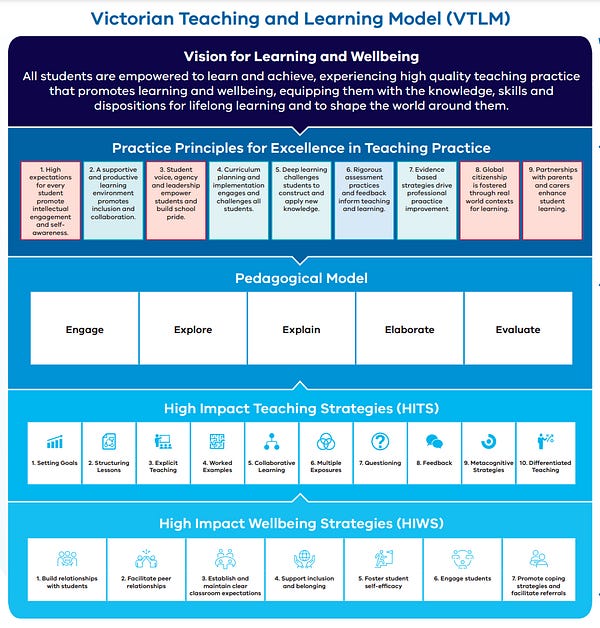
Trisha Jha (Publican Policy) · Substack · 2024 · Australia
Asks whether Victorian government schools really treat explicit teaching as a core component, comparing official documents and guidance with the Catholic sector's science of learning position.
Explicit instructionImplementation
Shaun Brien
Shaun Brien · Substack · 2026 · Australia
Practical advice on using a document camera to model live, show student work and give feedback without clunky transitions.
Explicit instructionChecking for understanding and responsive teaching
The Learning Dispatch
Carl Hendrick (The Learning Dispatch) · Substack · 2025 · UK
Hendrick examines a careful replication of the famous 1978 scaffolding study that found no benefit from the classic rule of more help after failure, and considers what this means for teaching and tutoring.
Explicit instructionEvidence, myths and debates
Filling the Pail
Greg Ashman (Filling the Pail) · Substack · 2023 · Australia
A short, practical reflection on keeping whole-class explicit teaching lively, using voice, story, urgency and momentum, and why being interesting does not mean being an entertainer.
Explicit instructionClassroom culture, routines and attention
On Education
Rebecca Birch (On Education) · Substack · 2024 · Australia
Birch explains how the TAPPLE sequence from Explicit Direct Instruction changed her secondary English teaching, walking through each step and what it is not, including its effect on workload.
Explicit instructionChecking for understanding and responsive teachingParticipation and opportunities to respond
WAGOLL Teaching
Ben Cooper (WAGOLL Teaching) · Substack · 2025 · UK
How to think aloud when modelling, including showing hesitations and corrections, so primary pupils hear the expert thinking behind a finished piece of work.
Explicit instruction
Jamie ClarkJamie Clark · One-page guide · Australia
Argues for scaffolding upwards rather than differentiating downwards, with worked examples of writing frames and guided practice that keep the task demanding while supporting students who struggle.
Explicit instructionTiered support and inclusion
NSW Department of EducationNSW Department of Education · Technique guide · Australia
Retrieval, spacing and review
The Learning Dispatch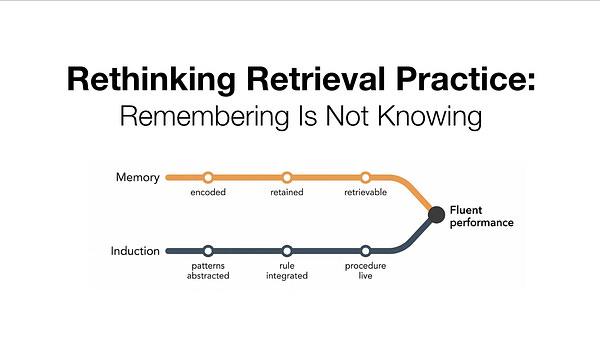
Carl Hendrick (The Learning Dispatch) · Substack · 2026 · UK
Using two recent studies, Hendrick shows that students can remember more yet apply no better, and argues retrieval practice works best to maintain knowledge that has first been properly understood.
Retrieval, spacing and reviewHow learning happens
The Economy of MeaningThe Economy of Meaning · Blog post · International
Retrieval, spacing and review
Minding the Gap
Natalie Wexler (Minding the Gap) · Substack · 2026 · USA
Wexler argues that explicit instruction and retrieval practice are not enough on their own, and that students also need to elaborate on new knowledge, with writing as a practical way to do it.
Retrieval, spacing and reviewWritingHow learning happens
Jamie ClarkJamie Clark · One-page guide · Australia
Why recalling information strengthens memory, with practical retrieval, spacing and interleaving ideas for lessons. Draws on Robert Bjork, Kate Jones and Tom Sherrington.
Retrieval, spacing and review
Carl Hendrick and Jamie ClarkCarl Hendrick and Jamie Clark · One-page guide · Australia
A poster version of Carl Hendrick's seven principles for retrieval practice, covering the value of forgetting and pitching enough challenge early. Useful for checking that quizzing is doing real work.
Retrieval, spacing and review
Paul Kirschner
Paul Kirschner · Substack · 2025 · International
Kirschner summarises a study in which short weekly quizzes, especially interleaved ones, markedly improved students' long-term understanding even though students found them harder at the time.
Retrieval, spacing and review
Shaun Brien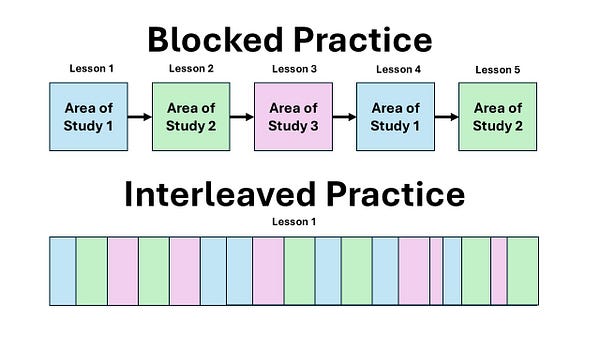
Shaun Brien · Substack · 2026 · Australia
Explains how interleaving mixed practice fights forgetting, and how one teacher fits interleaved revision lessons into a busy senior timetable.
Retrieval, spacing and review
The Learning Dispatch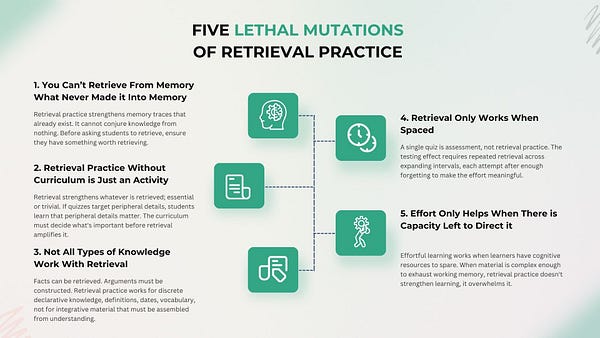
Carl Hendrick (The Learning Dispatch) · Substack · 2025 · UK
Hendrick sets out five ways retrieval practice goes wrong in classrooms, including quizzing on material never learnt and skipping spacing, and discusses a study on retrieval with complex material.
Retrieval, spacing and reviewEvidence, myths and debates
Jamie ClarkJamie Clark · One-page guide · Australia
Practical techniques for checking every student's understanding during a lesson, including choral response and the TAPPLE questioning sequence, so teachers can adjust teaching on the spot.
Checking for understanding and responsive teachingParticipation and opportunities to respond
Tips for TeachersCraig Barton (Tips for Teachers) · Substack · 2024 · UK
A short classroom tip for breaking the habit of asking "Does that make sense?", which rarely reveals understanding, by turning it into a game and replacing it with better checks.
Checking for understanding and responsive teachingParticipation and opportunities to respond
Shaun Brien
Shaun Brien · Substack · 2026 · Australia
A Victorian teacher explains why checking for understanding sits at the heart of explicit instruction, and how to do it quickly and often with the whole class.
Checking for understanding and responsive teachingExplicit instruction
American Educator (Craig Barton)American Educator (Craig Barton) · Article · UK
Checking for understanding and responsive teaching
Research Schools NetworkResearch Schools Network · Blog post · UK
Checking for understanding and responsive teaching
NSW Department of EducationNSW Department of Education · Guide · Australia
Checking for understanding and responsive teaching
The Learning Dispatch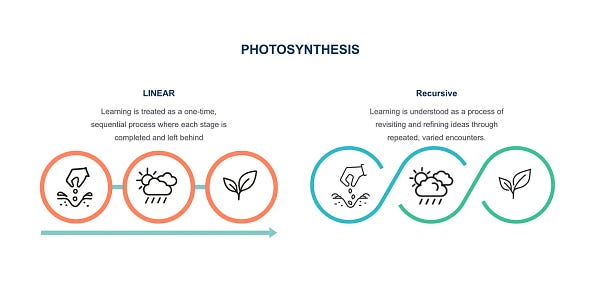
Carl Hendrick (The Learning Dispatch) · Substack · 2025 · UK
Written while working with Australian schools, Hendrick explains why learning is recursive rather than linear, what responsive teaching involves, and which lethal mutations to avoid.
Checking for understanding and responsive teachingKnowledge-rich curriculum and coherence
Dr Haili Hughes
Haili Hughes · Substack · 2026 · Australia
Hughes contrasts differentiation that dumbs down tasks or multiplies planning with responsive teaching, which keeps the learning ambitious for everyone and adjusts support when evidence shows it is needed.
Checking for understanding and responsive teachingTiered support and inclusion
Carl Hendrick and Jamie ClarkCarl Hendrick and Jamie Clark · One-page guide · Australia
A one-page version of Carl Hendrick's responsive teaching guide for UNESCO's International Bureau of Education, covering prior knowledge, high expectations and adapting to evidence of learning.
Checking for understanding and responsive teachingExplicit instruction
Jamie Clark (DistillED)
Jamie Clark (DistillED) · Newsletter article · 2026 · Australia
Treats mini-whiteboards as a whole-class participation routine rather than just a checking tool, covering the why and how of using them well.
Checking for understanding and responsive teachingParticipation and opportunities to respond
Tom Sherrington and Valentina Devid (DistillED)
Tom Sherrington and Valentina Devid (DistillED) · Newsletter article · 2026 · Australia
A guest piece reframing formative assessment as formative action, using short loops that turn classroom evidence into immediate teaching decisions.
Checking for understanding and responsive teachingAssessment and data
Teach Like a Champion
 Teach Like a Champion · Substack · 2025 · USA
Shows how teachers can circulate with purpose during independent work, tracking patterns in student answers and spotting misconceptions early enough to act on them in the lesson.
Checking for understanding and responsive teaching
WAGOLL Teaching
Ben Cooper (WAGOLL Teaching) · Substack · 2026 · UK
A primary headteacher shows how mini whiteboards can do more than quick checks, supporting memory, drafting and working through ideas during a lesson.
Checking for understanding and responsive teachingParticipation and opportunities to respond
Tips for TeachersCraig Barton (Tips for Teachers) · Substack · 2026 · UK
Barton explains a study testing whether students improve after discussing a concept question because they understand it or copy classmates, and what it suggests about using peer discussion in lessons.
Checking for understanding and responsive teachingParticipation and opportunities to respond
Jamie ClarkJamie Clark · One-page guide · Australia
Summarises Dylan Wiliam and Siobhan Leahy's five formative assessment strategies with practical tips for minute-by-minute teaching decisions.
Checking for understanding and responsive teachingAssessment and dataFeedback and practice
Shaun Brien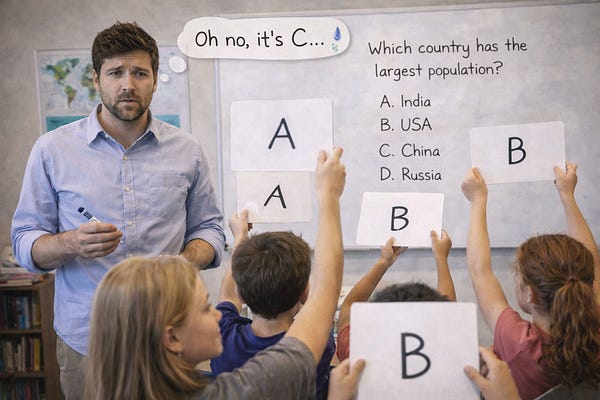
Shaun Brien · Substack · 2026 · Australia
A short guide to hinge questions, multiple-choice checks at a key point in a lesson that show whether the class is ready to move on or needs reteaching.
Checking for understanding and responsive teaching
Jamie ClarkJamie Clark · One-page guide · Australia
Explains how consistent cues and practised routines free working memory for learning, and why whole-school agreement on procedures matters. Draws on Peps Mccrea and Doug Lemov.
Classroom culture, routines and attention
Doug Lemov's Field Notes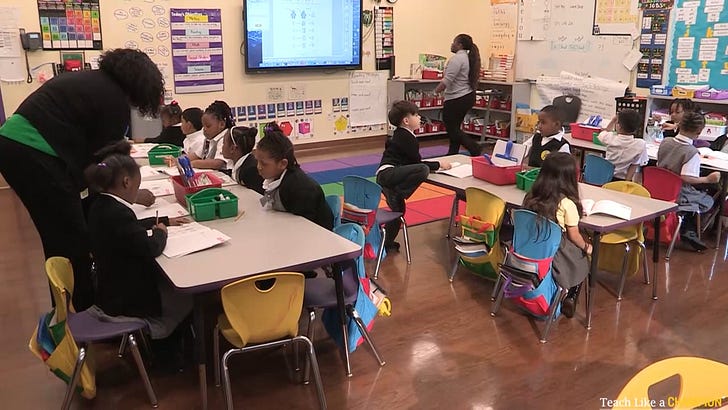
Doug Lemov (Doug Lemov's Field Notes) · Substack · 2026 · USA
Lemov shares a video of a teacher building the habit of following directions, and explains why such everyday routines are the hidden foundation for rich learning moments.
Classroom culture, routines and attentionParticipation and opportunities to respond
Dr Nathaniel Swain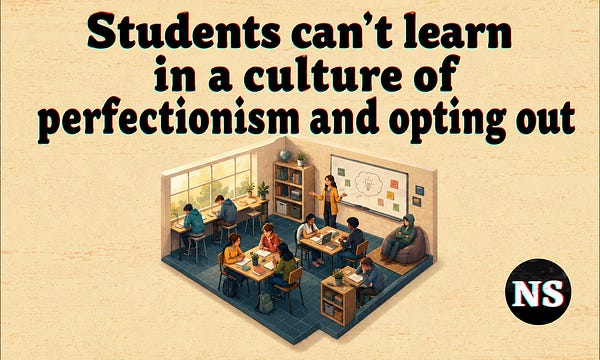
Nathaniel Swain · Substack · 2026 · Australia
Swain describes two classroom cultures that block learning, opting out and perfectionism, and explains how a deliberate culture of error and expected participation helps students take the risks learning needs.
Classroom culture, routines and attentionMotivation, self-efficacy and metacognitionParticipation and opportunities to respond
Jamie Clark (DistillED)
Jamie Clark (DistillED) · Newsletter article · 2026 · Australia
A framework for designing lessons that secure, direct and orchestrate students' attention, written up from a webinar. Covers distractions from devices, peers, the room and busy slides.
Classroom culture, routines and attentionHow learning happens
Teach Like a Champion
Teach Like a Champion · Substack · 2025 · USA
A practical guide to the first weeks of school, showing how to teach, model and practise routines explicitly so classrooms run smoothly and students feel safe and ready to learn.
Classroom culture, routines and attention
Shaun Brien
Shaun Brien · Substack · 2026 · Australia
Explains why routines free students' attention for learning, drawing on Victorian Department guidance, and sets out what effective classroom routines should include.
Classroom culture, routines and attention
WAGOLL Teaching
Ben Cooper (WAGOLL Teaching) · Substack · 2026 · UK
Argues that good pace is not about talking faster but removing friction, such as slow transitions and unclear instructions, that wastes primary lesson time.
Classroom culture, routines and attentionExplicit instruction
Doug Lemov's Field NotesDoug Lemov (Doug Lemov's Field Notes) · Substack · 2026 · USA
Drawing on Peps Mccrea's work, Lemov explains how students' sense of what peers approve of shapes their behaviour, and how teachers can amplify positive norms, especially around academic effort.
Classroom culture, routines and attentionSchool culture, trust and behaviourMotivation, self-efficacy and metacognition
Jamie ClarkJamie Clark · One-page guide · Australia
Summarises the principles and routines from Mark Dowley and Ollie Lovell's Australian book, including entry routines, gaining attention and tight transitions.
Classroom culture, routines and attentionSchool culture, trust and behaviour
Tips for TeachersCraig Barton (Tips for Teachers) · Substack · 2024 · UK
Barton shows how rephrasing a cold-call question as an invitation to begin, rather than to give the one right answer, lowers the stakes and gets more reluctant students contributing.
Participation and opportunities to respondChecking for understanding and responsive teaching
Tom Sherrington
 Tom Sherrington · Substack · 2026 · UK
From hundreds of lesson visits, Sherrington names three priorities for most schools, inclusive teaching, responsive teaching and teaching through talk, and links to his earlier writing on each.
Participation and opportunities to respondChecking for understanding and responsive teachingOral language
Teach Like a Champion
Teach Like a Champion · Substack · 2025 · USA
The Teach Like a Champion team shows how to set up a tight Turn and Talk, from the prompt and time cue to how teachers listen in and follow up afterwards.
Participation and opportunities to respondOral language
NSW Department of EducationNSW Department of Education · Technique guide · Australia
Participation and opportunities to respond
Tom Sherrington
Tom Sherrington · Substack · 2026 · UK
A practical list of small changes from Sherrington's training, including cold calling done well, structured think-pair-share, whole answers, show-me boards and rehearsal, all aimed at involving every student in thinking.
Participation and opportunities to respondChecking for understanding and responsive teaching
On Education
Rebecca Birch (On Education) · Substack · 2024 · Australia
Birch makes the case for cold calling in secondary classrooms as a lever for equity, citing research that it increases voluntary participation, and offers advice on making it work well.
Participation and opportunities to respondChecking for understanding and responsive teaching
Doug Lemov's Field NotesDoug Lemov (Doug Lemov's Field Notes) · Substack · 2026 · USA
Using a classroom video, Lemov highlights two small details that make cold calling smoother and more positive, including polling the class after a short writing task before calling on anyone.
Participation and opportunities to respondChecking for understanding and responsive teaching
Dr Haili HughesHaili Hughes · Substack · 2026 · Australia
Hughes explains why drawing names at random is not the same as purposeful cold calling, and how teachers can choose who to ask based on what they need to find out.
Participation and opportunities to respondChecking for understanding and responsive teaching
Jamie ClarkJamie Clark · One-page guide · Australia
Based on a Tom Sherrington blog post, this one-pager lists six things to check so that every student, not just a few, is attending, thinking and making meaning.
Participation and opportunities to respondChecking for understanding and responsive teaching
Jamie Clark (DistillED)
Jamie Clark (DistillED) · Newsletter article · 2025 · Australia
Explains cold calling as an invitation to join the thinking rather than a way to catch students out, with dos and don'ts drawn from Doug Lemov and Tom Sherrington.
Participation and opportunities to respondChecking for understanding and responsive teaching
WAGOLL Teaching
Ben Cooper (WAGOLL Teaching) · Substack · 2026 · UK
Explains how questioning routines like turn and talk and cold call can lose their purpose, and how to make questioning draw on the knowledge pupils need.
Participation and opportunities to respondChecking for understanding and responsive teaching
Tips for TeachersCraig Barton (Tips for Teachers) · Substack · 2026 · UK
Barton summarises a meta-analysis of 29 studies finding that response cards, where every student answers at once, lift participation and quiz results and reduce off-task behaviour compared with hands up.
Participation and opportunities to respondChecking for understanding and responsive teaching
Teach Like a Champion
Teach Like a Champion · Substack · 2025 · USA
Explains how to use Cold Call warmly and predictably so every student expects to think and answer, and how it gives teachers a truer picture of what the class understands.
Participation and opportunities to respondChecking for understanding and responsive teaching
Tom Sherrington
Tom Sherrington · Substack · 2026 · UK
Sherrington explains why relying on hands up lets confident students dominate, and makes the case for routines that ensure every student's thinking is heard and explored.
Participation and opportunities to respondOral language
No More Marking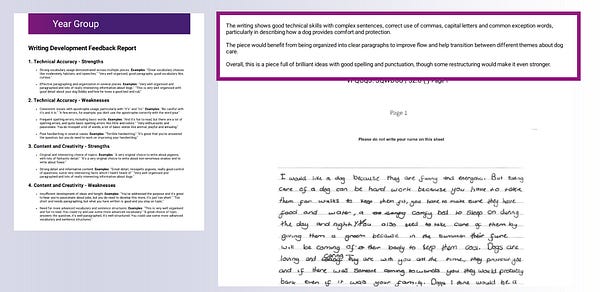
Daisy Christodoulou (No More Marking) · Substack · 2025 · UK
Christodoulou argues that detailed written comments describe weaknesses without helping students fix them, and makes the case for whole-class feedback and practice that changes what students do next.
Feedback and practiceAssessment and data
Jamie ClarkJamie Clark · One-page guide · Australia
Shows how to give feedback to a whole class using a crib sheet and a six-step routine, a workload-friendly approach that targets common misconceptions.
Feedback and practice
Paul KirschnerPaul Kirschner · Substack · 2026 · International
An explanation of reduced feedback, the least known of the Bjorks' desirable difficulties, and how gradually stepping back from instant correction can build lasting learning and self-regulation.
Feedback and practiceRetrieval, spacing and review
Deslea Konza, for the South Australian Department of Education and Children's ServicesDeslea Konza, for the South Australian Department of Education and Children's Services · Research into practice paper (PDF) · 2011 · Australia
Deslea Konza explains how oral language shapes later reading, with classroom strategies such as wait time, simpler teacher talk, think-alouds, shared story books and daily table talk.
Oral languageFrameworks and research behind literacy
Tom Sherrington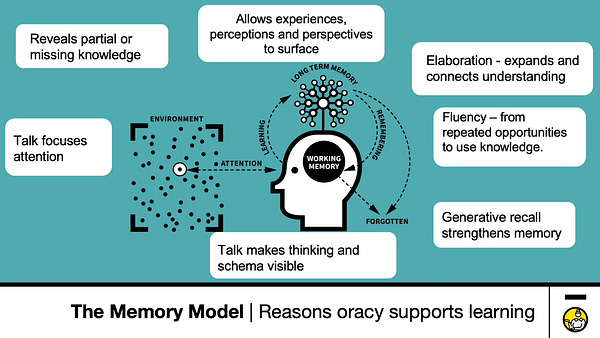
Tom Sherrington · Substack · 2026 · UK
Sherrington uses a simple memory model to explain how talk supports learning, and argues that if talk helps students learn, routines must give every student the chance to talk, not just a few.
Oral languageParticipation and opportunities to respondHow learning happens
The Learning Spy
 David Didau (The Learning Spy) · Substack · 2026 · UK
Didau weighs England's push to give oracy equal status with reading and writing. He argues students speak well when they know a lot, and sets out what schools should prioritise instead.
Oral languageKnowledge-rich curriculum and coherence
Tom Sherrington
Tom Sherrington · Substack · 2026 · UK
Sherrington rejects the idea that oracy competes with knowledge, and shows how the Voice 21 benchmarks place subject knowledge at the centre of talk in a rich curriculum.
Oral languageKnowledge-rich curriculum and coherence
WAGOLL Teaching
Ben Cooper (WAGOLL Teaching) · Substack · 2026 · UK
Describes the everyday habit of asking pupils to repeat answers in fuller, more precise language, and how it builds spoken and academic vocabulary.
Oral language
Tom Sherrington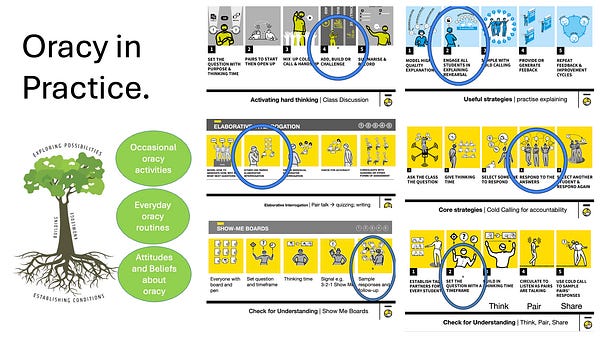
Tom Sherrington · Substack · 2026 · UK
Using his tree metaphor, Sherrington sets out how a school can build an oracy-rich curriculum from routines teachers already use, starting with shared values about talk and listening.
Oral languageKnowledge-rich curriculum and coherenceClassroom culture, routines and attention
Alison Clarke, SpelfabetAlison Clarke, Spelfabet · Blog post · 2022 · Australia
Weighs up the debate about oral-only phonemic awareness. The evidence favours using letters, though short spoken blending and segmenting games still have a place before school and in intervention.
Phonological and phonemic awarenessPhonics
Liana Loewus, Reading UniverseLiana Loewus, Reading Universe · Article · USA
A short summary of the research, from the National Reading Panel's findings to the current advice that most children do best when phoneme awareness is taught with letters.
Phonological and phonemic awareness
The Curriculum Insight Project
 Karen Vaites (The Curriculum Insight Project) · Substack · 2026 · USA
Karen Vaites traces how a stand-alone oral phonemic awareness program became widespread in US schools, and why recent research favours linking sounds to letters instead.
Phonological and phonemic awarenessEvidence, myths and debates
Jen's Substack
 Jen O'Sullivan · Substack · 2025 · International
Explains what research says about teaching phonemic awareness, including why short, focused practice linked to letters works better than long oral-only sessions before children see print.
Phonological and phonemic awareness
Five from FiveFive from Five · Guide · Australia
Five from Five's teacher guide to phonemic awareness, covering what it is, why it matters for reading and spelling, and how to teach it.
Phonological and phonemic awareness
Premier of VictoriaPremier of Victoria · Media release · Australia
Phonics
Making Words Make Sense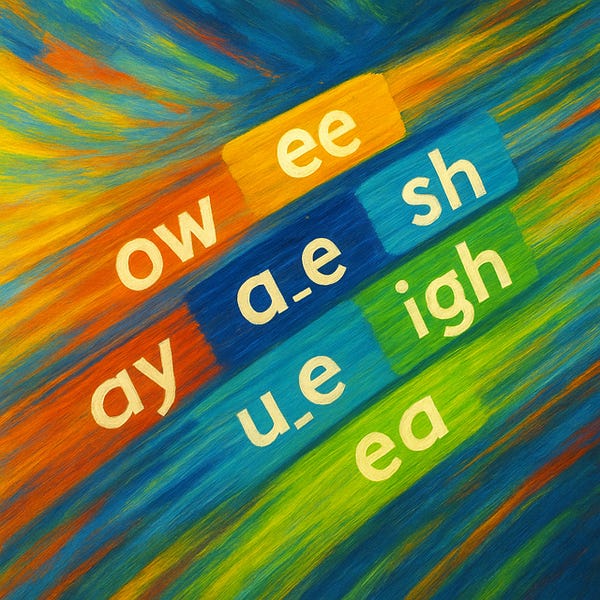
 Harriett Janetos (Making Words Make Sense) · Substack · 2025 · USA
A reading specialist argues against overteaching phonics, suggesting teachers move quickly through the essential code, spend less time on low-value features, and use science of learning principles to plan practice.
Phonics
Making Words Make Sense
Harriett Janetos (Making Words Make Sense) · Substack · 2026 · USA
A detailed explanation of why the three-cueing approach confuses guessing from meaning with reading the word, and what code-based teaching of word identification should look like instead.
PhonicsEvidence, myths and debates
OfstedOfsted · Blog post · UK
Phonics
Making Words Make Sense
Harriett Janetos (Making Words Make Sense) · Substack · 2026 · USA
A reading specialist names the one classroom activity she would keep for each part of literacy, from phonemic awareness to grammar, and explains the reasoning behind each choice.
PhonicsWriting
Jen's Substack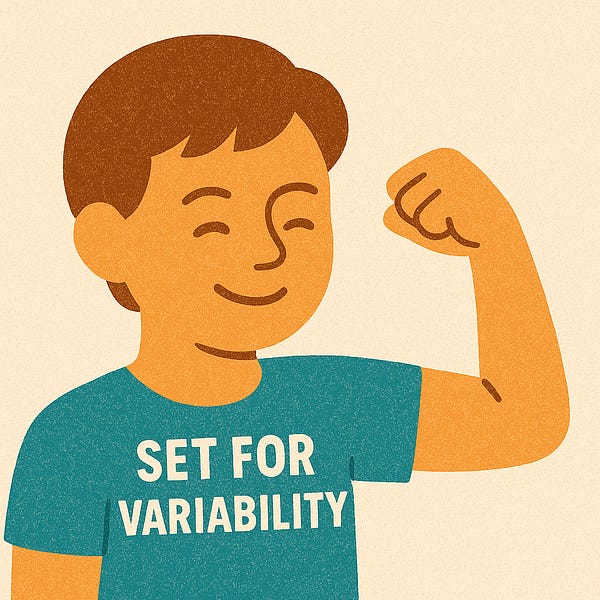
Jen O'Sullivan · Substack · 2025 · International
Explains set for variability, the step where children adjust a sounded-out word to one they know, and why oral vocabulary is essential for making it work.
PhonicsVocabulary
Five from FiveFive from Five · Guide · Australia
A clear introduction to phonics with key terms defined, the case for explicit and systematic teaching, and links to pages on decodable books, blending and segmenting.
Phonics
Making Words Make Sense
Harriett Janetos (Making Words Make Sense) · Substack · 2026 · USA
An introduction to linguistic phonics, which starts from the sounds of speech and maps them to spellings, and how practices such as encoding before decoding might simplify early teaching.
PhonicsSpelling and morphology
Making Words Make Sense
Harriett Janetos (Making Words Make Sense) · Substack · 2026 · USA
Argues that English language learners need the same systematic reading teaching as other students, plus extra attention to vocabulary and meaning so they understand the words they can decode.
PhonicsVocabulary
Karen Woods, Journal of Think Forward EducatorsKaren Woods, Journal of Think Forward Educators · Journal article (PDF) · 2024 · Australia
Karen Woods answers a common question from schools that have dropped benchmarking, namely how to listen to students read and what to look for.
Reading fluencyAssessment and data
Teach Like a Champion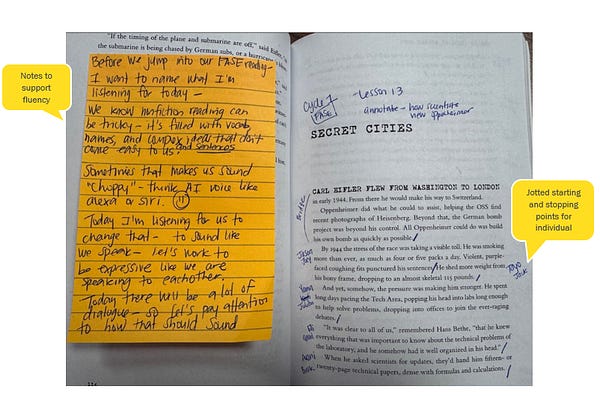
Teach Like a Champion · Substack · 2026 · USA
Explains how teacher-led oral reading, planned and supported well, builds fluency without the anxiety of popcorn reading, including ways to support struggling readers in short bursts of text.
Reading fluencyReading comprehension and text study
Jen's Substack
Jen O'Sullivan · Substack · 2025 · International
An explainer on prosody, the rhythm, stress and intonation of reading aloud, and how it signals understanding, with practical ideas for modelling and practising expressive reading.
Reading fluency
Five from FiveFive from Five · Guide · Australia
Five from Five's teacher guide to reading fluency, how it links decoding to comprehension, and how to build and assess it.
Reading fluency
Teach Like a Champion
Teach Like a Champion · Substack · 2026 · USA
Practical moves for teaching prosody, including modelling, phrasing and attending to punctuation, so students move from accurate but effortful reading to reading that sounds like language, including in nonfiction.
Reading fluency
Teach Like a Champion
Teach Like a Champion · Substack · 2026 · USA
Argues that vocabulary grows through planned explicit teaching, rich texts and repeated encounters rather than guessing from context clues, with practical moves for literacy lessons.
VocabularyReading comprehension and text study
Jen's Substack
Jen O'Sullivan · Substack · 2026 · International
Shows how to choose words worth teaching from picture books and read-alouds already on the shelf, with examples and guidance on planning vocabulary across primary school.
VocabularyOral language
Five from FiveFive from Five · Guide · Australia
Five from Five's teacher guide to vocabulary, covering why word knowledge drives comprehension and how to teach words explicitly.
Vocabulary
Minding the Gap
Natalie Wexler (Minding the Gap) · Substack · 2026 · USA
Wexler reports a study isolating complex syntax as a factor in comprehension, and describes how teachers can spot sentence-level difficulties and use sentence-level writing activities to teach them.
Reading comprehension and text studyWriting
Doug Lemov's Field NotesDoug Lemov (Doug Lemov's Field Notes) · Substack · 2026 · USA
In an excerpt from his guide to the science of reading, Lemov explains why the hope of teaching transferable comprehension skills is a chimera, and why inference and understanding depend on knowledge.
Reading comprehension and text studyKnowledge-rich curriculum and coherenceFrameworks and research behind literacy
Five from FiveFive from Five · Guide · Australia
Five from Five's teacher guide to reading comprehension, drawing together language, background knowledge and comprehension strategies.
Reading comprehension and text study
Doug Lemov's Field Notes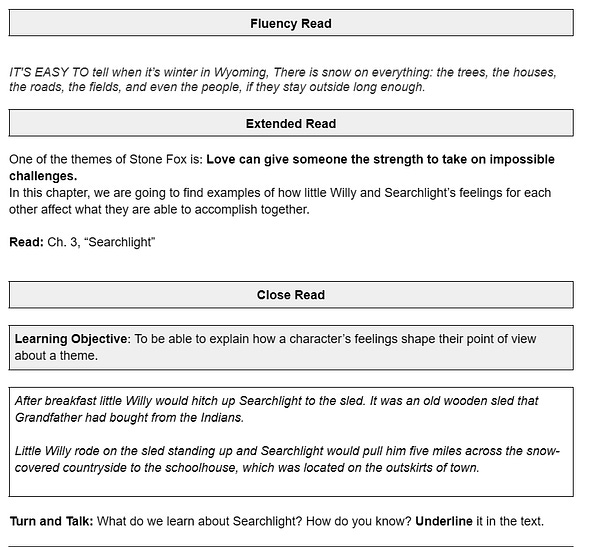
Doug Lemov (Doug Lemov's Field Notes) · Substack · 2026 · USA
Lemov shares highlights from a Year 3 teacher's unit on the novel Stone Fox, showing how shared reading, fluency, vocabulary and writing prompts are planned into lessons built around a whole text.
Reading comprehension and text studyReading fluency
Education Endowment FoundationEducation Endowment Foundation · Guidance report · UK
Reading comprehension and text studyWriting
Daniel Willingham, American EducatorDaniel Willingham, American Educator · Article · 2006 · USA
Daniel Willingham explains why knowledge is more than grist for the mill, and how what students already know speeds and strengthens their reading comprehension, learning and thinking.
Reading comprehension and text studyKnowledge-rich curriculum and coherenceFrameworks and research behind literacy
Hugh Catts, American EducatorHugh Catts, American Educator · Article · USA
Hugh Catts argues that reading comprehension is not a single skill that can be taught and tested on its own, because it depends on the reader's knowledge, the text and the purpose for reading.
Reading comprehension and text studyFrameworks and research behind literacy
The Learning Dispatch
Carl Hendrick (The Learning Dispatch) · Substack · 2026 · UK
Drawing on new research and his own teaching, Hendrick argues that comprehension depends far more on knowing word meanings than on generic strategies, and makes the case for rich vocabulary teaching as an equity lever.
Reading comprehension and text studyVocabularyFrameworks and research behind literacy
Minding the Gap
Natalie Wexler (Minding the Gap) · Substack · 2024 · USA
Wexler explains why many older students still struggle to read, why upper-grade teachers need different training from early-years teachers, and which approaches look promising.
Reading comprehension and text studyTiered support and inclusionKnowledge-rich curriculum and coherence
On Education
Rebecca Birch (On Education) · Substack · 2024 · Australia
Birch reflects on co-creating a reading spine, a planned sequence of whole texts across the years, and on why schools should ensure every student has a copy of the books they study.
Reading comprehension and text studyKnowledge-rich curriculum and coherence
Curriculum 101
Mary Myatt (Curriculum 101) · Substack · 2026 · UK
Makes the case that reading demanding texts aloud in every subject builds vocabulary, background knowledge and access to complex language for all pupils, including those who cannot yet read them alone.
Reading comprehension and text studyKnowledge-rich curriculum and coherence
The Curriculum Insight Project
The Curriculum Insight Project · Substack · 2024 · USA
Weighs the debate over independent reading time, siding with Christopher Such's view that reading volume matters but works best inside a structured, knowledge-building curriculum.
Reading comprehension and text studyKnowledge-rich curriculum and coherence
Daniel WillinghamDaniel Willingham · Substack · 2025 · USA
Willingham highlights Tim Shanahan's case against levelled reading, explaining why matching children to texts by reading level is inefficient and holds back weaker readers.
Reading comprehension and text studyEvidence, myths and debates
Doug Lemov's Field NotesDoug Lemov (Doug Lemov's Field Notes) · Substack · 2026 · USA
Lemov explains the idea of re-centring the text, reading together in class from the same book, and why it builds attention, fluency and shared meaning when technology competes for students' focus.
Reading comprehension and text studyReading fluency
Five from FiveFive from Five · Blog post · 2023 · Australia
A short argument that, as schools get decoding and fluency right, well-taught comprehension strategies still have a place alongside knowledge building.
Reading comprehension and text study
Minding the Gap
Natalie Wexler (Minding the Gap) · Substack · 2025 · USA
Wexler untangles competing claims that schools teach too little or too much comprehension, tracing the debate back to Durkin and arguing that literacy and content teaching must work together.
Reading comprehension and text studyFrameworks and research behind literacy
Doug Lemov's Field NotesDoug Lemov (Doug Lemov's Field Notes) · Substack · 2026 · USA
Lemov shows how shared oral reading of a whole book frees students' working memory for discussion, using classroom video to illustrate how reading together leads to richer conversation.
Reading comprehension and text studyReading fluencyOral language
The Educator
The Educator · News report on research · Australia
Spelling and morphology
Jolimont Primary SchoolJolimont Primary School · School case study · Australia
Spelling and morphology
Teacher magazine (ACER)
Teacher magazine (ACER) · Article · Australia
Spelling and morphology
Louisa Moats, American EducatorLouisa Moats, American Educator · Article · USA
Louisa Moats on how spelling supports reading, and why English spelling is more regular and predictable than many people think. The article downloads as a PDF from this page.
Spelling and morphologyFrameworks and research behind literacy
Malatesha Joshi, Rebecca Treiman, Suzanne Carreker and Louisa Moats, American EducatorMalatesha Joshi, Rebecca Treiman, Suzanne Carreker and Louisa Moats, American Educator · Article · USA
Four researchers make the case that spelling is an integral part of learning the language and not a matter of memorising. The article downloads as a PDF from this page.
Spelling and morphologyFrameworks and research behind literacy
Making Words Make Sense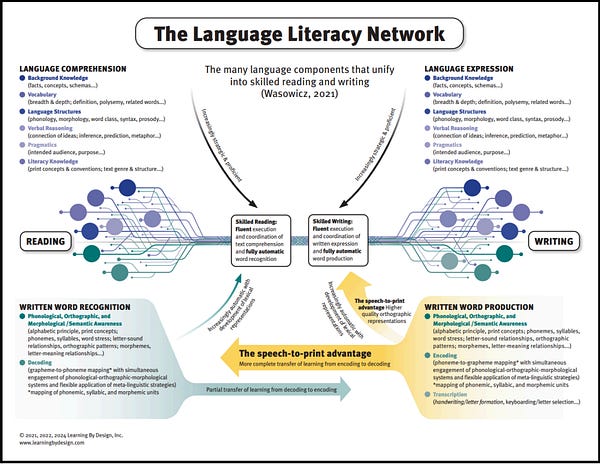
Harriett Janetos (Making Words Make Sense) · Substack · 2025 · USA
Sets out what, when and how to teach morphemes, arguing for a clear progression from early sound-based spelling to prefixes, suffixes and roots as children's reading develops.
Spelling and morphologyVocabulary
Jen's Substack
Jen O'Sullivan · Substack · 2026 · International
An Irish literacy lecturer explains why the weekly spelling list and Friday test measure short-term recall, and offers alternatives built on phonology, morphology and word sorts.
Spelling and morphology
Steve Graham, American EducatorSteve Graham, American Educator · Article · USA
Steve Graham explains why handwriting places the earliest limits on young writers, and how teaching it well improves the amount and quality of what children write, not only its legibility.
Handwriting and transcriptionWriting
Anabela Malpique, Deborah Pino Pasternak and Susan Ledger, The ConversationAnabela Malpique, Deborah Pino Pasternak and Susan Ledger, The Conversation · Article · 2024 · Australia
Researchers report that Year 2 students in Perth wrote longer, better stories by hand than on a laptop, and explain why handwriting and typing both need to be taught.
Handwriting and transcriptionWriting
Marion McBride, Reading UniverseMarion McBride, Reading Universe · Guide · USA
A two-part guide to why handwriting is taught and how to teach letter formation explicitly, with the words to say while modelling each lower-case letter.
Handwriting and transcription
Jamie Clark (DistillED)
Jamie Clark (DistillED) · Newsletter article · 2026 · Australia
Looks at the evidence on handwriting versus typing and argues the slowness of handwriting can aid learning, with guidance on deciding which to use.
Handwriting and transcriptionHow learning happens
James Lyra, First OTJames Lyra, First OT · Research summary · 3 pages · 2026 · Australia
A three-page summary by occupational therapist James Lyra of why handwriting matters for reading and writing, what works in teaching it, and where the evidence runs out. A great one to share with a team.
Handwriting and transcriptionWriting
Department for Education (England)Department for Education (England) · Government guidance · UK
Writing
AERO
AERO · Practice guides · Australia
Writing
Minding the Gap
Natalie Wexler (Minding the Gap) · Substack · 2024 · USA
Wexler reviews write-to-learn research, linking writing to retrieval and elaboration, and argues that writing would boost learning more reliably if teachers made it manageable through explicit sentence-level instruction.
WritingRetrieval, spacing and review
AERO
AERO · Practice guide · Australia
Writing
Ambition Institute
Ambition Institute · Explainer · UK
Writing
Phil Coloca and Jeanette Breen, Think Forward Educators
Phil Coloca and Jeanette Breen, Think Forward Educators · Blog post · 2026 · Australia
Phil Coloca and Jeanette Breen argue that writing instruction has sat in a black box for too long and needs a clear, sequenced approach.
Writing
The Learning Spy
David Didau (The Learning Spy) · Substack · 2026 · UK
Didau explains how a Years 7 to 9 English curriculum can teach sentence and paragraph skills in short, controlled bursts, delaying extended essays until the parts are secure. It also promotes his resource pack.
WritingKnowledge-rich curriculum and coherence
The Learning Dispatch
Carl Hendrick (The Learning Dispatch) · Substack · 2026 · UK
Hendrick asks why writing research, which is substantial, has had far less influence than the science of reading, and outlines what the evidence says about teaching writing.
WritingFrameworks and research behind literacy
No More Marking
Daisy Christodoulou (No More Marking) · Substack · 2025 · UK
Using a marathon metaphor, Christodoulou explains why students should still learn to write when AI can produce text, because the purpose of writing in school is the thinking it builds.
WritingHow learning happens
On Education
Rebecca Birch (On Education) · Substack · 2025 · Australia
Birch describes implementing a whole-school writing approach in a secondary school, including the tools used and how to support teachers who feel unsure about teaching writing in their subject.
WritingImplementationTeams, middle leadership and professional culture
Doug Lemov's Field NotesDoug Lemov (Doug Lemov's Field Notes) · Substack · 2026 · USA
Through video of a middle school teacher, Lemov explains formative writing, where students write to discover what they think, and shows how to make it a regular routine in response to rich texts.
WritingReading comprehension and text study
Teach Like a Champion
Teach Like a Champion · Substack · 2026 · USA
Shows how brief, low-stakes writing mid-lesson, such as a Stop and Jot, gives every student time to think before discussion and lifts the quality of what they then say.
WritingParticipation and opportunities to respond
Shaun Brien
Shaun Brien · Substack · 2026 · Australia
A teacher reads widely on writing instruction, including free AERO courses, and draws out what strong whole-class writing teaching should include, with sentence-level work at its centre.
WritingTiered support and inclusion
AERO
AERO · Practice guide · Australia
Writing
Department for Education (England)Department for Education (England) · Government guidance · 2025 · UK
Writing
Minding the Gap
Natalie Wexler (Minding the Gap) · Substack · 2024 · USA
Wexler shows how explicit writing activities can be woven into discussion of content-rich lessons, moving between talk and writing to deepen understanding and build stronger writers.
WritingKnowledge-rich curriculum and coherence
AEROAERO · Case study · Australia
Writing
Grattan InstituteGrattan Institute · Report · Australia
Frameworks and research behind literacy
Linda Farrell, Michael Hunter, Marcia Davidson and Tina Osenga, Reading RocketsLinda Farrell, Michael Hunter, Marcia Davidson and Tina Osenga, Reading Rockets · Article · USA
A plain explanation of the model, in which reading comprehension depends on both decoding and language comprehension. It shows how to work out which of the two is holding a student back.
Frameworks and research behind literacy
Reading UniverseReading Universe · Slides for a staff session · USA
Ready-made slides for leading a staff session on the Simple View of Reading, with the research explained, discussion questions, videos of model lessons and classroom resources.
Frameworks and research behind literacyInstructional coaching and professional learning
Kaia Cunningham, Landmark OutreachKaia Cunningham, Landmark Outreach · Article · 2022 · USA
Introduces Hollis Scarborough's 2001 Reading Rope, showing how the word recognition and language comprehension strands combine in skilled reading, and how teachers can use it to find where a reader is stuck.
Frameworks and research behind literacy
Pamela Snow, The Snow ReportPamela Snow, The Snow Report · Blog post · 2020 · Australia
Pamela Snow walks through her Language House on her blog, from the solid ground of early relationships up to the roof. She welcomes teachers using the model with attribution.
Frameworks and research behind literacyOral language
Joan Sedita, Keys to LiteracyJoan Sedita, Keys to Literacy · Article (PDF) · 2019 · USA
Joan Sedita's own article introducing the Writing Rope, which sorts the skills of writing into five strands, namely critical thinking, syntax, text structure, writing craft and transcription.
Frameworks and research behind literacyWriting
Deslea Konza, for the South Australian Department of Education and Children's ServicesDeslea Konza, for the South Australian Department of Education and Children's Services · Research into practice paper (PDF) · 2010 · Australia
A short, readable paper that pulls the big reading reviews into six components, from oral language and phonological awareness through to fluency and comprehension. Good pre-reading for a staff meeting.
Frameworks and research behind literacy
AEROAERO · Explainer · 2023 · Australia
AERO's overview of how children learn to read. It introduces the Simple View of Reading, Scarborough's Reading Rope and the core reading skills, and explains why explicit, systematic teaching matters.
Frameworks and research behind literacy
The Reading LeagueThe Reading League · Guide, free eBook · USA
The Reading League's guide to what the science of reading is and what it is not. The free eBook is a helpful shared reference when the term is being used loosely.
Frameworks and research behind literacyEvidence, myths and debates
Louisa Moats, American EducatorLouisa Moats, American Educator · Article · 2020 · USA
Louisa Moats on what expert teachers of reading should know and be able to do, in the 2020 edition of her paper for American Educator.
Frameworks and research behind literacyInstructional coaching and professional learning
International Dyslexia AssociationInternational Dyslexia Association · Article · USA
The International Dyslexia Association explains structured literacy, covering what is taught, from phonemes to sentence structure and meaning, and how it is taught, explicitly, systematically and cumulatively.
Frameworks and research behind literacy
The Learning Dispatch
Carl Hendrick (The Learning Dispatch) · Substack · 2026 · UK
Hendrick explains research suggesting children form an early guess at a word's spelling from hearing it, which helps explain why oral vocabulary supports later reading and spelling.
Frameworks and research behind literacyVocabularySpelling and morphology
Making Words Make Sense
Harriett Janetos (Making Words Make Sense) · Substack · 2025 · USA
Janetos unpacks Linnea Ehri's own explanation of orthographic mapping, clearing up confusion about the term and what it means for teaching children to read and spell words.
Frameworks and research behind literacyPhonics
The Curriculum Insight Project
Olivia Mullins (The Curriculum Insight Project) · Substack · 2026 · USA
Olivia Mullins responds to a meta-analysis questioning content-rich teaching for comprehension, explaining why its design does not overturn evidence that knowledge supports reading comprehension.
Frameworks and research behind literacyReading comprehension and text study
Jen's Substack
Jen O'Sullivan · Substack · 2025 · International
Explains why skilled readers recognise words through orthographic mapping rather than visual memory, and the role of phonemic awareness and phonics in building that store of words.
Frameworks and research behind literacyPhonological and phonemic awareness
Daniel WillinghamDaniel Willingham · Substack · 2025 · USA
Willingham explains why the term science of reading is used loosely, separating what basic research shows about reading from claims about classroom practice.
Frameworks and research behind literacyEvidence, myths and debates
Tips for TeachersCraig Barton (Tips for Teachers) · Substack · 2026 · UK
Barton unpacks a study of primary maths worksheets pairing correct and incorrect worked examples with self-explanation prompts, looking at their effect on students' motivation and how they view errors.
Explicit teaching in mathsMotivation, self-efficacy and metacognition
Sue Davis, Journal of Think Forward EducatorsSue Davis, Journal of Think Forward Educators · Journal article (PDF) · 2024 · Australia
Sue Davis explains why Ochre Education (now Impact Curriculum) built daily review resources for maths and what they look like.
Fluency, number facts and daily reviewRetrieval, spacing and review
Tips for TeachersCraig Barton (Tips for Teachers) · Substack · 2026 · UK
Barton breaks down a meta-analysis on spacing and retrieval practice in maths, including where spacing helps most and what the findings mean for planning practice and review in maths classrooms.
Fluency, number facts and daily reviewRetrieval, spacing and review
VIC Maths Notes
 Alex Blanksby (VIC Maths Notes) · Substack · 2026 · Australia
A Victorian maths teacher uses learning classical guitar to reflect on what fluency and mastery require, and why practice must prepare students for performing under different conditions.
Fluency, number facts and daily reviewFeedback and practice
VIC Maths Notes
Alex Blanksby (VIC Maths Notes) · Substack · 2026 · Australia
Looks at how much of senior General Mathematics depends on percentages and proportional reasoning, common student gaps, and ways to rebuild that fluency.
Number, multiplication and fractions
National Center on Intensive InterventionNational Center on Intensive Intervention · Guides and explainers · USA
A short guide from the National Center on Intensive Intervention explaining key practices to use when teaching students who need intensive maths intervention.
Screening, intervention and maths difficultiesTiered support and inclusionLearning difficulties, disorders and additional needs
Tips for TeachersCraig Barton (Tips for Teachers) · Substack · 2026 · UK
Barton summarises a very large international analysis linking maths anxiety with lower achievement, and considers what teachers can reasonably take from a correlational finding of this kind.
Screening, intervention and maths difficultiesMotivation, self-efficacy and metacognition
Filling the Pail
Greg Ashman (Filling the Pail) · Substack · 2024 · Australia
Ashman questions the popular idea, especially in maths, of designing lessons so students struggle first, examining the case for constructivism and productive failure and the ethics of deliberate difficulty.
Leading maths and the evidenceExplicit instructionEvidence, myths and debates
Grattan InstituteGrattan Institute · Report · Australia
Leading maths and the evidence
The Educator
The Educator · News report on Grattan guide · Australia
Leading maths and the evidence
NCETMNCETM · Presentation · UK
Leading maths and the evidence
Tips for TeachersCraig Barton (Tips for Teachers) · Substack · 2026 · UK
Barton summarises an EEF evaluation comparing setting and mixed-attainment groups in lower secondary maths, covering effects on progress and confidence and the implications for schools deciding how to group.
Leading maths and the evidenceTiered support and inclusion
VIC Maths NotesAlex Blanksby (VIC Maths Notes) · Substack · 2026 · Australia
An attempt to reorganise the Australian maths curriculum by the progression of ideas rather than by year level, so teachers can see what comes before and after each concept.
Leading maths and the evidenceKnowledge-rich curriculum and coherence
Grattan InstituteGrattan Institute · Guide · Australia
Companion to the Maths Guarantee report, written for primary principals. Describes what strong whole-school maths teaching involves and the steps leaders can take to build it.
Leading maths and the evidenceInstructional leadership
Filling the Pail
Greg Ashman (Filling the Pail) · Substack · 2024 · Australia
Ashman critiques Building Thinking Classrooms, arguing that it defines explained and modelled instruction as not thinking and that its claims are not supported by cognitive science.
Leading maths and the evidenceRepresentations and problem solvingEvidence, myths and debates
No More Marking
Daisy Christodoulou (No More Marking) · Substack · 2026 · UK
Christodoulou revisits a myth from her own book, arguing that skills such as creativity and critical thinking depend on knowledge of a particular domain, and considers what follows for schools.
Knowledge-rich curriculum and coherenceHow learning happens
Minding the Gap
Natalie Wexler (Minding the Gap) · Substack · 2026 · USA
Wexler visits a New York sixth-grade civics class where rapid, game-like recall of history facts gives students the knowledge to analyse ideas, showing memorisation and engagement can go together.
Knowledge-rich curriculum and coherenceRetrieval, spacing and review
On Education
Rebecca Birch (On Education) · Substack · 2023 · Australia
Through a reading passage that leaves most readers lost, Birch shows how background knowledge shapes comprehension, and argues an ambitious curriculum is how schools give every student access to powerful knowledge.
Knowledge-rich curriculum and coherenceReading comprehension and text study
Paul Kirschner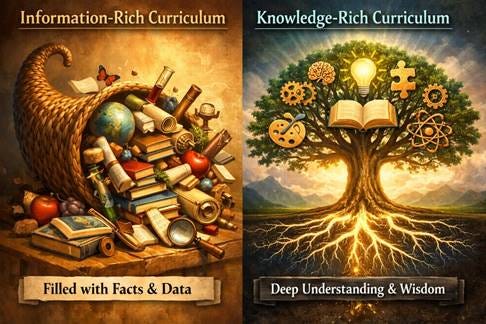
Paul Kirschner · Substack · 2026 · International
Kirschner separates a knowledge-rich curriculum, which is sequenced so ideas build on each other across years, from one that simply piles up facts, and explains why the difference matters for teachers and schools.
Knowledge-rich curriculum and coherenceHow learning happens
Curriculum 101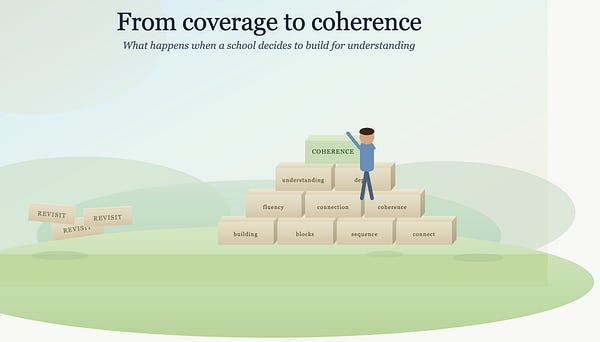
Mary Myatt (Curriculum 101) · Substack · 2026 · UK
Drawing on a conversation with a head of maths, Myatt describes how a curriculum that revisits content without deepening it can be rebuilt so pupils connect ideas and grow more fluent.
Knowledge-rich curriculum and coherenceLeading maths and the evidence
Daniel WillinghamDaniel Willingham · Article · 2020 · USA
Knowledge-rich curriculum and coherence
Martin Ravindran, Think Forward Educators
Martin Ravindran, Think Forward Educators · Blog post · 2026 · Australia
Martin Ravindran reflects on a Learning First curriculum conference and what a rigorous, specific knowledge-rich curriculum would mean for Australian schools.
Knowledge-rich curriculum and coherence
Haili Hughes, Think Forward Educators
Haili Hughes, Think Forward Educators · Blog post · 2026 · Australia
Associate Professor Haili Hughes of La Trobe University makes the case that what teachers know cannot be separated from how well they teach.
Knowledge-rich curriculum and coherenceInstructional coaching and professional learning
The Bell Ringer
 Holly Korbey (The Bell Ringer) · Substack · 2025 · USA
Korbey looks at how US curriculum review platforms rate materials, why each one examines only part of the picture, and why evidence of impact is so often missing when schools choose.
Knowledge-rich curriculum and coherenceInstructional leadership
Minding the Gap
Natalie Wexler (Minding the Gap) · Substack · 2026 · USA
Using one widely adopted US program as a case study, Wexler explains how a curriculum can look knowledge-building but lack depth and coherence, and why ratings can mislead schools.
Knowledge-rich curriculum and coherenceReading comprehension and text study
No More Marking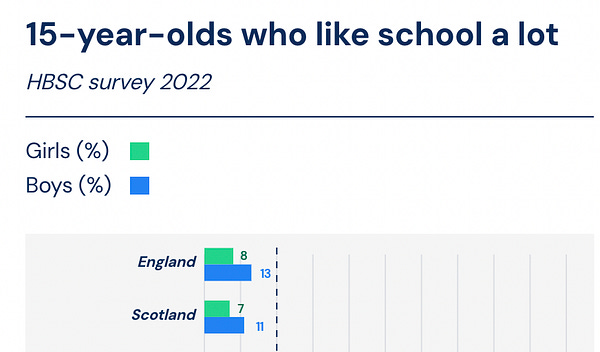
Daisy Christodoulou (No More Marking) · Substack · 2026 · UK
Christodoulou tests the claim that England's knowledge-rich reforms worsened young people's mental health, comparing trends across the UK nations and concluding the evidence does not support the link.
Knowledge-rich curriculum and coherenceEvidence, myths and debates
Publican Policy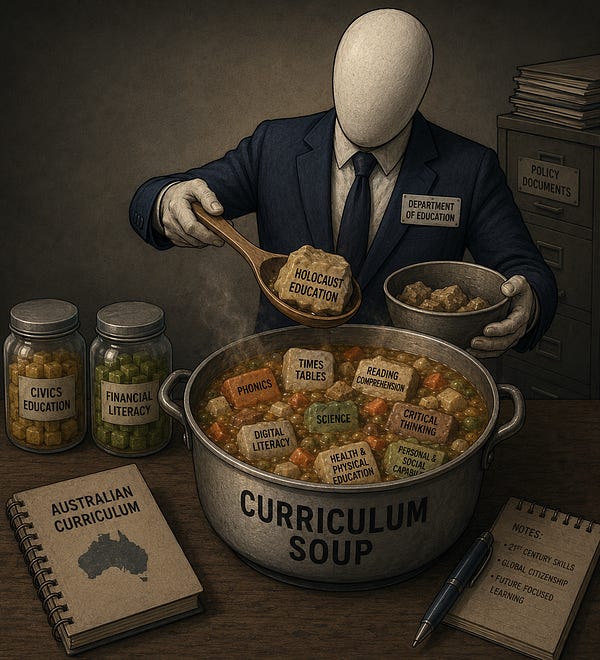
Trisha Jha (Publican Policy) · Substack · 2026 · Australia
Explains why content being in the curriculum often does not mean it is taught, and argues Australian systems need better visibility of what students actually learn.
Knowledge-rich curriculum and coherenceInstructional leadership
On Education
Rebecca Birch (On Education) · Substack · 2025 · Australia
Prompted by a Productivity Commission report, Birch discusses why quality-assured lesson materials matter for teacher time and student outcomes in Australia, and how they relate to teacher expertise.
Knowledge-rich curriculum and coherenceInstructional leadership
Paul KirschnerPaul Kirschner · Substack · 2025 · International
Drawing on their work on new Flemish primary goals, the authors answer five objections to knowledge-rich curriculum, such as that it is disconnected facts, stifles creativity or is too ambitious.
Knowledge-rich curriculum and coherenceEvidence, myths and debates
Curriculum 101
Mary Myatt (Curriculum 101) · Substack · 2022 · UK
A brief guide to sequencing a curriculum around the key concepts in a subject, so that big ideas thread through lessons and help pupils connect new content to what they know.
Knowledge-rich curriculum and coherence
Minding the Gap
Natalie Wexler (Minding the Gap) · Substack · 2026 · USA
Wexler examines complaints that knowledge-building literacy curricula lack whole books, separating fair criticism from misunderstanding and noting what teachers report about students' stamina with longer texts.
Knowledge-rich curriculum and coherenceReading comprehension and text study
No More Marking
Daisy Christodoulou (No More Marking) · Substack · 2025 · UK
Christodoulou describes how many students fail to spot even obvious hoaxes online, and argues that background knowledge matters more than generic media literacy for judging what is true.
Knowledge-rich curriculum and coherenceReading comprehension and text study
No More Marking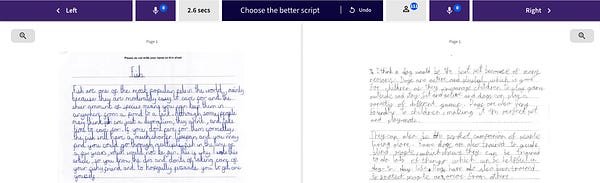
Daisy Christodoulou (No More Marking) · Substack · 2025 · UK
A clear introduction to comparative judgement, where teachers compare two pieces of writing rather than marking against a rubric, why it is more reliable, and what adding AI judges changes.
Assessment and dataWriting
Mark R Shinn's Peculiar Observations About MTSS ImplementationMark R. Shinn · Substack · 2026 · USA
Shinn explains multiple gating, a simple stepwise approach to reading screening that tests everyone briefly and only assesses further when needed, as an alternative to overloaded screening systems.
Assessment and dataTiered support and inclusion
Mark R Shinn's Peculiar Observations About MTSS ImplementationMark R. Shinn · Substack · 2026 · USA
Shinn reflects on how to read progress monitoring graphs from curriculum-based measures, including rate of improvement and when the data signal that an intervention should change.
Assessment and dataTiered support and inclusion
No More Marking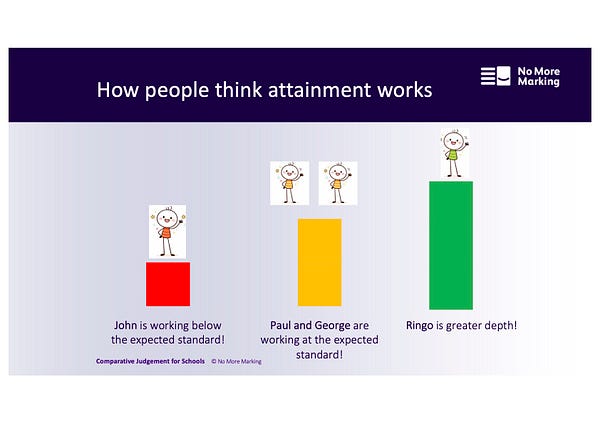
Daisy Christodoulou (No More Marking) · Substack · 2026 · UK
Christodoulou explains why grades suggest sharper differences between students than really exist, the distortions this causes, and why reporting the probability of each grade gives a more honest picture.
Assessment and data
Making Words Make Sense
Harriett Janetos (Making Words Make Sense) · Substack · 2026 · USA
Janetos weighs the time cost of running records against what they actually tell teachers, and argues for alternative assessments that pinpoint gaps in decoding and word knowledge.
Assessment and dataPhonics
Kylie HoeyKylie Hoey · Substack · 2026 · Australia
Explains why reported progress can appear to drop when schools adopt better teaching and more reliable assessment, and how leaders can prepare parents and staff for it.
Assessment and dataInstructional leadership
VIC Maths Notes
Alex Blanksby (VIC Maths Notes) · Substack · 2026 · Australia
Argues for standardised assessments at the end of Year 6 and Year 10 in Australia, weighing objections and explaining what such data could tell schools about maths gaps.
Assessment and dataLeading maths and the evidence
Mark R Shinn's Peculiar Observations About MTSS Implementation
Mark R. Shinn · Substack · 2026 · USA
A long defence of oral reading fluency measures as a screening and progress monitoring tool, answering the common worry that they ignore comprehension.
Assessment and dataReading fluency
No More Marking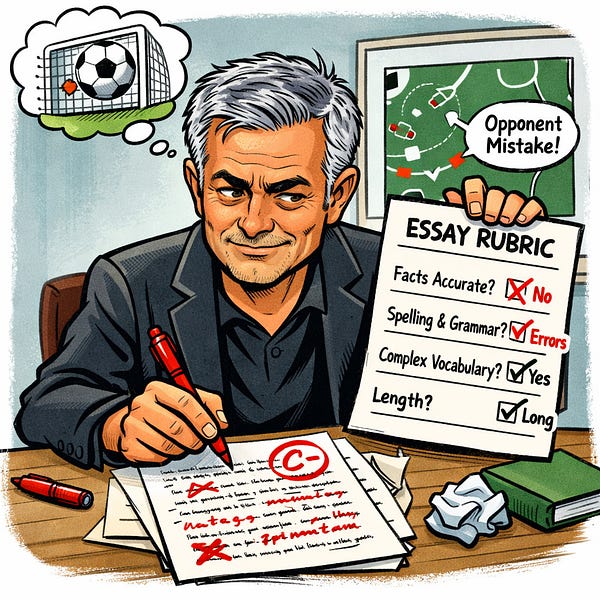
Daisy Christodoulou (No More Marking) · Substack · 2026 · UK
Drawing on a national history essay assessment, Christodoulou looks at what judges reward, including factual accuracy, and offers advice on writing clearer criteria for both human and AI markers.
Assessment and dataWriting
Mark R Shinn's Peculiar Observations About MTSS ImplementationMark R. Shinn · Substack · 2026 · USA
Drawing on 40 years of MTSS work, Shinn describes how benchmark screening has grown into too many tests, and argues for a simpler purpose and fewer measures.
Assessment and dataTiered support and inclusion
Mark R Shinn's Peculiar Observations About MTSS ImplementationMark R. Shinn · Substack · 2026 · USA
A short warning against treating the 80, 15 and 5 per cent figures in MTSS triangles as targets, arguing schools should simply know which students need more intensive support.
Tiered support and inclusion
Curriculum 101
Mary Myatt (Curriculum 101) · Substack · 2026 · UK
Myatt explores how well-meant supports, such as simplified tasks and heavy prompting, can lower expectations, and how to keep challenge high while making it manageable for all pupils.
Tiered support and inclusionExplicit instruction
Lucy Wings and Jeremy Barr, Journal of Think Forward EducatorsLucy Wings and Jeremy Barr, Journal of Think Forward Educators · Journal article (PDF) · 2024 · Australia
Lucy Wings and Jeremy Barr describe putting a structured literacy approach in place in a special school setting.
Tiered support and inclusionLearning difficulties, disorders and additional needs
Stephanie Dehghani, Think Forward Educators
Stephanie Dehghani, Think Forward Educators · Blog post · 2026 · Australia
Stephanie Dehghani takes Graham Nuthall's line that ability is the consequence, not the cause, of what children learn, and considers what it means for supporting every student.
Tiered support and inclusionMotivation, self-efficacy and metacognition
AEROAERO · Explainer · 2024 · Australia
AERO's explainer sets out the features of a multi-tiered system of supports and what each tier involves, from strong classroom teaching to intensive help. Written for Years 7 to 9 but useful to any school.
Tiered support and inclusionAssessment and dataLearning difficulties, disorders and additional needs
Education Endowment FoundationEducation Endowment Foundation · Guidance report · UK
The Education Endowment Foundation's guidance report gives five evidence-based recommendations for supporting pupils with additional needs in mainstream classrooms, with high quality everyday teaching at the centre.
Tiered support and inclusionExplicit instructionLearning difficulties, disorders and additional needs
Minding the Gap
Natalie Wexler (Minding the Gap) · Substack · 2026 · USA
Wexler contrasts a struggling reader whose interventions are unrelated to class work with one whose support reinforces the core curriculum, and argues that coherence across support lowers cognitive load.
Tiered support and inclusionKnowledge-rich curriculum and coherence
Filling the Pail
Greg Ashman (Filling the Pail) · Substack · 2023 · Australia
Ashman links tiered support to whole-class teaching, arguing that explicit teaching, including structured literacy, is a strong Tier 1 approach for learning and behaviour and is inclusive of students with disabilities.
Tiered support and inclusionExplicit instructionClassroom culture, routines and attention
Tips for TeachersCraig Barton (Tips for Teachers) · Substack · 2026 · UK
Barton summarises Linda Graham and colleagues' review of differentiation research, which found the term used for very different, sometimes incompatible practices, and discusses what that means for teachers.
Tiered support and inclusionEvidence, myths and debates
No More Marking
Daisy Christodoulou (No More Marking) · Substack · 2026 · UK
Christodoulou argues that the answer for older students who leave school without basic English and maths is better teaching of foundational skills, rather than steering them early into vocational routes.
Tiered support and inclusionKnowledge-rich curriculum and coherence
On Education
Rebecca Birch (On Education) · Substack · 2026 · Australia
Birch argues that inclusive teaching should build on the needs students share, such as clear explanation, predictability and guided practice, rather than treating a growing group of students as individual adjustments.
Tiered support and inclusionLearning difficulties, disorders and additional needsExplicit instruction
Dr Haili Hughes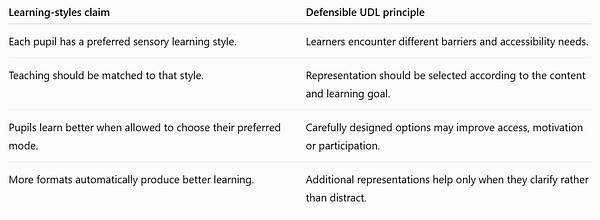
Haili Hughes · Substack · 2026 · Australia
Hughes questions how Universal Design for Learning is presented to teachers, raising concerns about workload, unlimited student choice and drift towards learning-styles thinking.
Tiered support and inclusionEvidence, myths and debates
The Curriculum Insight Project
Karen Vaites (The Curriculum Insight Project) · Substack · 2026 · USA
Discusses a study in which struggling Year 3 readers did better with challenging, content-rich texts plus explicit teaching of multisyllabic words than with lower-level texts.
Tiered support and inclusionReading comprehension and text study
Jen's SubstackJen O'Sullivan · Substack · 2025 · International
Questions guided reading with levelled books, and describes how small-group teaching can instead target specific skills for the children who need extra support.
Tiered support and inclusionPhonics
Publican Policy
Trisha Jha (Publican Policy) · Substack · 2024 · Australia
A summary of research on small-group tutoring in Australia after COVID, covering what makes tutoring effective and what systems and schools should do next.
Tiered support and inclusionImplementation
Kylie Hoey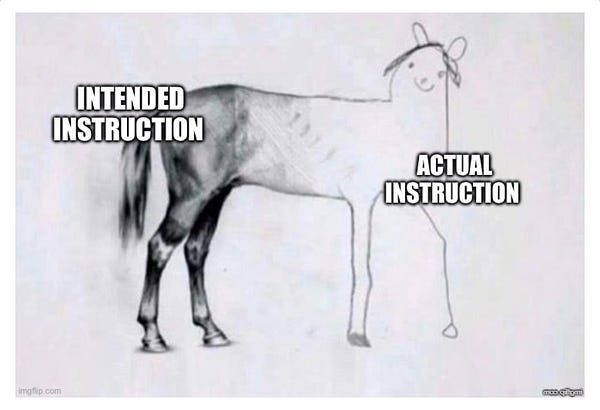
Kylie Hoey · Substack · 2026 · Australia
An Australian leader argues that much reading intervention is too infrequent, too different from good teaching or poorly matched to need, and describes what effective intervention should look like.
Tiered support and inclusionPhonics
Curriculum 101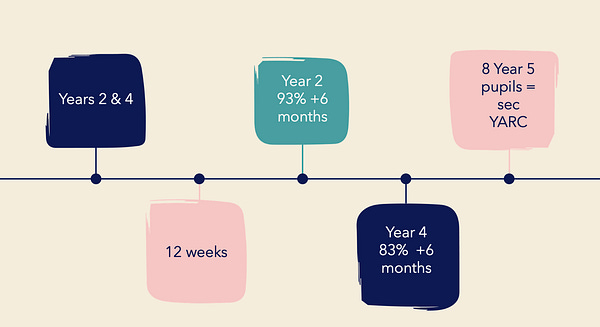
Mary Myatt (Curriculum 101) · Substack · 2026 · UK
A short account of a whole-class reading lesson where pupils with additional needs worked alongside peers on the same rich text, and what made that possible.
Tiered support and inclusionReading comprehension and text study
Mark R Shinn's Peculiar Observations About MTSS ImplementationMark R. Shinn · Substack · 2026 · USA
Argues that secondary MTSS often copies primary practices that do not fit, and that schools must first decide who needs support using measures suited to older students.
Tiered support and inclusion
Australasian ADHD Professionals Association (Kim Fuller)Australasian ADHD Professionals Association (Kim Fuller) · Fact sheet · Australia
A short fact sheet from the body behind Australia's ADHD clinical guideline. It explains why educators need to recognise possible ADHD and support students from preschool onwards.
Learning difficulties, disorders and additional needsTiered support and inclusionClassroom culture, routines and attention
Department of Education, VictoriaDepartment of Education, Victoria · Guides and explainers · Australia
The Victorian department's overview of learning difficulties for teachers, covering possible signs, whole-school approaches, and links to its information guides on literacy difficulties, including dyslexia and dysgraphia, and numeracy difficulties, including dyscalculia.
Learning difficulties, disorders and additional needsTiered support and inclusion
AllPlay Learn, Monash UniversityAllPlay Learn, Monash University · Teacher guide · Australia
A plain guide for primary teachers covering what ADHD is, the strengths these students bring, evidence-based strategies, best practice tips and points to consider across the curriculum.
Learning difficulties, disorders and additional needsTiered support and inclusionClassroom culture, routines and attention
Jen's SubstackJen O'Sullivan · Substack · 2025 · International
Takes apart common beliefs about dyslexia, such as letter reversals and visual causes, and explains what research shows about its language-based roots and why the myths matter.
Learning difficulties, disorders and additional needs
Department of Education, VictoriaDepartment of Education, Victoria · Guide · 2022 · Australia
Victoria's guide for teachers on numeracy difficulties, including dyscalculia. It explains core number abilities, a three-phase assessment process and intervention across the response to intervention tiers.
Learning difficulties, disorders and additional needsScreening, intervention and maths difficultiesTiered support and inclusionAssessment and data
SPELD VictoriaSPELD Victoria · Guides and explainers · Australia
SPELD Victoria explains how a specific learning disorder differs from broader learning difficulties, why the impact on learning matters most, and what support the organisation offers Victorian teachers and schools.
Learning difficulties, disorders and additional needsTiered support and inclusion
Department of Education, VictoriaDepartment of Education, Victoria · Resource page · Australia
The Victorian department's collection of guidance for schools on autistic students, linking to the Autism Education Strategy, transition tip sheets, behaviour support tools and partner organisations.
Learning difficulties, disorders and additional needsTiered support and inclusion
AUSPELDAUSPELD · Online guide · Australia
A free online guide from AUSPELD that gives parents and carers current information about learning disabilities in children. Worth knowing so you can point families to something trustworthy.
Learning difficulties, disorders and additional needsTiered support and inclusion
RADLDRADLD · Fact sheet · UK
RADLD's fact sheet on developmental language disorder, from the international group that raises awareness of the condition. A short page to share with colleagues and families.
Learning difficulties, disorders and additional needsOral languageTiered support and inclusion
International Dyslexia AssociationInternational Dyslexia Association · Definition · 2025 · USA
The International Dyslexia Association's current definition, adopted in October 2025. It describes dyslexia as difficulty with accurate or fluent word reading and spelling that sits on a continuum and persists despite effective teaching.
Learning difficulties, disorders and additional needsTiered support and inclusion
UnderstoodUnderstood · Guides and explainers · USA
Understood's article describes dysgraphia as a writing challenge that affects skills such as handwriting, typing and spelling, and explains how it can affect learning.
Learning difficulties, disorders and additional needsHandwriting and transcriptionWritingTiered support and inclusion
The Royal Children's Hospital MelbourneThe Royal Children's Hospital Melbourne · Fact sheet · Australia
The Royal Children's Hospital's fact sheet for families on supporting a child with ADHD at school and at home. Handy to share with parents so everyone is working from the same advice.
Learning difficulties, disorders and additional needsTiered support and inclusionSchool culture, trust and behaviour
Flynn Vamos and Melanie Porter, for ADHD AustraliaFlynn Vamos and Melanie Porter, for ADHD Australia · Article · Australia
Two psychology researchers report what Australian primary teachers told them about including students with ADHD, which teachers described as the blind spot of inclusion.
Learning difficulties, disorders and additional needsTiered support and inclusionClassroom culture, routines and attention
Yellow Ladybugs, with the Department of Education, VictoriaYellow Ladybugs, with the Department of Education, Victoria · Website guide · Australia
A website guide to supporting autistic girls and gender-diverse students, covering masking, hidden anxiety, peer relationships, group work, executive functioning and class rules.
Learning difficulties, disorders and additional needsTiered support and inclusionSchool culture, trust and behaviour
AmazeAmaze · Tip sheet (PDF) · Australia
Amaze's tip sheet for Year 6 teachers on writing a transition plan with the student, the family and the secondary school before an autistic student moves on.
Learning difficulties, disorders and additional needsTiered support and inclusion
inclusionED, with Elizabeth DicksoninclusionED, with Elizabeth Dickson · Practice series · Australia
An introduction to the Disability Discrimination Act and the Disability Standards for Education, written with education law expert Professor Elizabeth Dickson. Covers educators' obligations, discrimination, harassment and victimisation.
Learning difficulties, disorders and additional needsTiered support and inclusionInstructional leadership
AITSLAITSL · Resource collection · Australia
AITSL's collection of elaborations and videos showing how the Disability Standards for Education connect to the Teacher Standards and what they ask of teachers and leaders.
Learning difficulties, disorders and additional needsTiered support and inclusionInstructional leadership
Australian Government Department of EducationAustralian Government Department of Education · Government resource page · Australia
The Australian Government's home for the Standards, with fact sheets, exemplars of practice and the national guide to planning personalised learning and support.
Learning difficulties, disorders and additional needsTiered support and inclusionInstructional leadership
The Learning Dispatch
Carl Hendrick (The Learning Dispatch) · Substack · 2025 · UK
Hendrick discusses a computational study suggesting students with ADHD and dyslexia face distinct extra costs in unguided learning, and why clear, explicit guidance matters even more for them.
Learning difficulties, disorders and additional needsExplicit instructionTiered support and inclusion
Department of Education, VictoriaDepartment of Education, Victoria · Policy and guidance · Australia
The Victorian government school policy on Individual Education Plans. It sets out which students must have one, reminds schools of their duty to make reasonable adjustments, and links to guidance and templates.
Learning difficulties, disorders and additional needsTiered support and inclusionInstructional leadership
Australasian ADHD Professionals Association (Kim Fuller)Australasian ADHD Professionals Association (Kim Fuller) · Fact sheet · Australia
Examples of common reasonable adjustments for students with ADHD, tied to the Disability Standards for Education. It also notes when anxiety or autism alongside ADHD may call for more.
Learning difficulties, disorders and additional needsTiered support and inclusionClassroom culture, routines and attention
AllPlay Learn, Monash UniversityAllPlay Learn, Monash University · Teacher guide · Australia
A guide for primary teachers that sets out what autism is, the strengths autistic students bring, evidence-based strategies, best practice tips and curriculum considerations.
Learning difficulties, disorders and additional needsTiered support and inclusionClassroom culture, routines and attention
Jen's Substack
Jen O'Sullivan · Substack · 2026 · International
After her daughter's late dyslexia diagnosis despite strong standardised scores, the author lists signs teachers can watch for in reading, spelling and writing that test scores can miss.
Learning difficulties, disorders and additional needsAssessment and data
Department of Education, VictoriaDepartment of Education, Victoria · Policy and guidance · Australia
The Victorian policy on Student Support Groups, the meeting of school, family and others that plans support for a student with disability or diverse learning needs.
Learning difficulties, disorders and additional needsTiered support and inclusionInstructional leadershipSchool culture, trust and behaviour
SteplabSteplab · Guide · UK
Instructional coaching and professional learning
Dr Haili HughesHaili Hughes · Substack · 2026 · Australia
Hughes argues that reducing teaching to a list of approved moves strips out the subject knowledge, judgement and responsiveness that make it intellectual work, and that pupils lose out when that happens.
Instructional coaching and professional learningInstructional leadership
Steplab (Josh Goodrich)Steplab (Josh Goodrich) · Essay · UK
Instructional coaching and professional learning
Publican Policy
Trisha Jha (Publican Policy) · Substack · 2026 · Australia
Reviews a trial in which professional development on teacher mindsets, called a culture of learning, lifted student outcomes, and argues it complements rather than competes with science of learning approaches.
Instructional coaching and professional learningEvidence, myths and debates
Dr Haili Hughes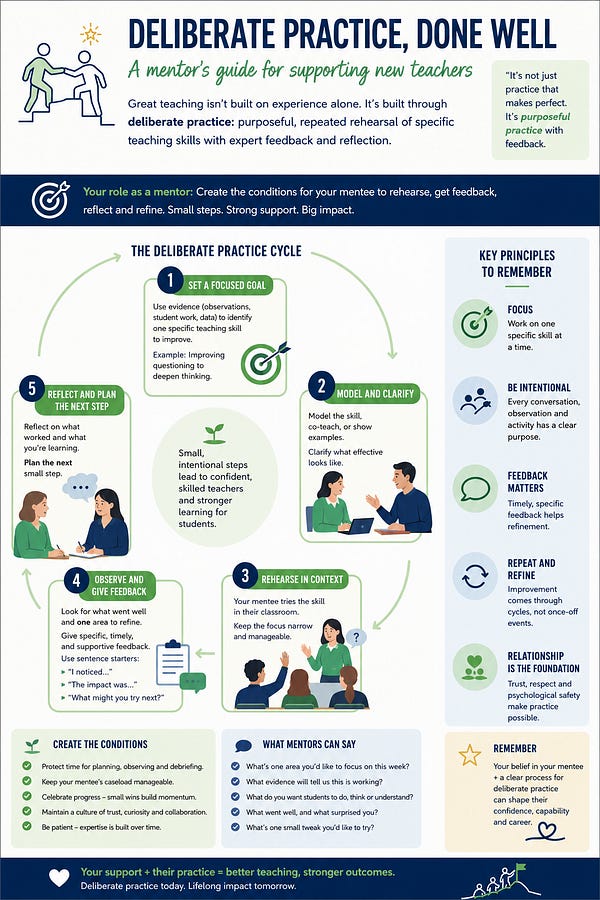
Haili Hughes · Substack · 2026 · Australia
Hughes explains why experience alone does not make teachers better, and how focused, repeated rehearsal of specific techniques within coaching helps teachers turn professional learning into classroom practice.
Instructional coaching and professional learning
AERO
AERO · Research summary · Australia
Instructional coaching and professional learning
Steplab (Harry Fletcher-Wood)
Steplab (Harry Fletcher-Wood) · Essay · UK
Instructional coaching and professional learning
Ambition Institute (Peps Mccrea)
Ambition Institute (Peps Mccrea) · Paper · 2018 · UK
Instructional coaching and professional learning
Deans for ImpactDeans for Impact · Report · 2016 · USA
Instructional coaching and professional learning
Sims and colleagues (EEF)Sims and colleagues (EEF) · Evidence review · 2021 · UK
Instructional coaching and professional learning
Haili Hughes and Jamie ClarkHaili Hughes and Jamie Clark · One-page guide · Australia
Haili Hughes's five strategies for mentors and coaches of early career teachers, including shared language and using video to pin down specific next steps.
Instructional coaching and professional learning
Jamie Clark (DistillED)
Jamie Clark (DistillED) · Newsletter article · 2026 · Australia
Distinguishes a strategy (what you do) from a principle (why you do it) and argues professional learning should start from principles. Builds on a Haili Hughes article.
Instructional coaching and professional learningEvidence, myths and debates
Paul Kirschner
Paul Kirschner and Nidhi Sachdeva · Substack · 2026 · International
Kirschner and Sachdeva explain why expert teaching is hard to see in a lesson, warn against judging by surface features such as a lively room, and argue that student learning remains the best available measure.
Instructional coaching and professional learningInstructional leadership
Curriculum 101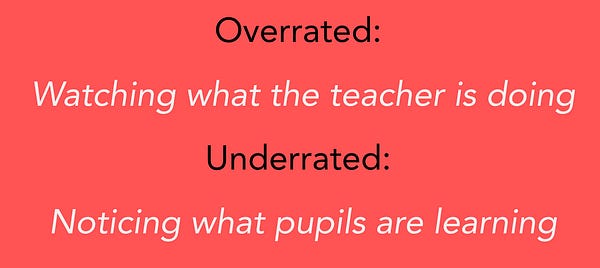
Mary Myatt (Curriculum 101) · Substack · 2026 · UK
A short challenge to lesson observations that judge teacher performance, suggesting observers look instead for evidence of what pupils are thinking and learning.
Instructional coaching and professional learningInstructional leadership
VIC Maths Notes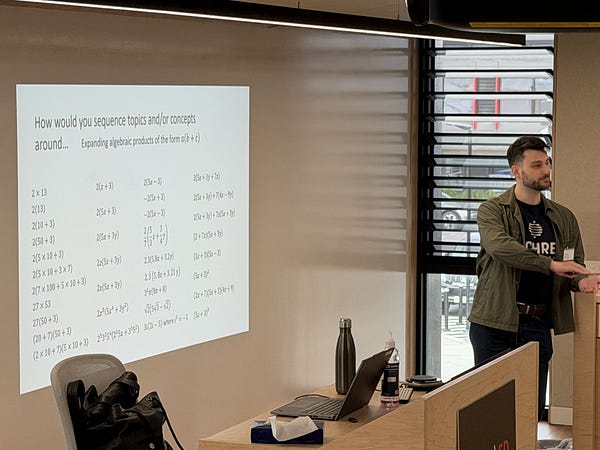
Alex Blanksby (VIC Maths Notes) · Substack · 2026 · Australia
A Victorian maths teacher shares his takeaways from sessions at researchED Ballarat 2026, a large Australian conference on evidence-informed teaching, starting with a keynote on opportunities to respond.
Instructional coaching and professional learningParticipation and opportunities to respond
WAGOLL Teaching
Ben Cooper (WAGOLL Teaching) · Substack · 2025 · UK
Describes a six-week professional development cycle for embedding one teaching strategy at a time, with modelling, practice and follow-up to avoid lethal mutations.
Instructional coaching and professional learningImplementation
Dr Haili Hughes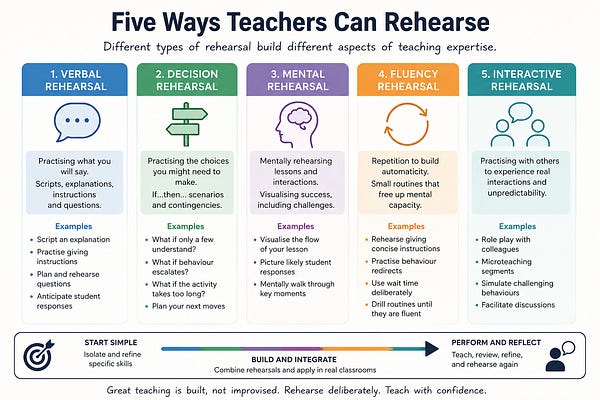
Haili Hughes · Substack · 2026 · Australia
Hughes argues that rehearsal in professional learning should not default to role play, and that coaches should ask what kind of practice best suits the particular part of teaching being developed.
Instructional coaching and professional learning
Steplab
Steplab · Essay · UK
Instructional coaching and professional learning
Steplab (Josh Goodrich)
Steplab (Josh Goodrich) · Essay · UK
Instructional coaching and professional learning
Publican Policy
Trisha Jha (Publican Policy) · Substack · 2026 · Australia
Checks progress on Australian reforms to initial teacher education, including core content on reading and learning, and asks how far universities have actually changed.
Instructional coaching and professional learningImplementation
Dr Haili HughesHaili Hughes · Substack · 2026 · Australia
Comparing England and Australia, Hughes argues that strong teachers do not automatically make strong mentors, and that mentor training is a worthwhile investment in new teachers and retention.
Instructional coaching and professional learningTeams, middle leadership and professional culture
Ambition Institute
Ambition Institute · Blog post · UK
Instructional leadershipSchool culture, trust and behaviour
Teacher magazine (ACER)
Teacher magazine (ACER) · Article · Australia
Instructional leadershipSchool culture, trust and behaviour
EducationHQ
EducationHQ · News report · Australia
Instructional leadershipSchool culture, trust and behaviour
AITSLAITSL · Guidelines and videos · Australia
Instructional leadershipSchool culture, trust and behaviour
Dr Haili Hughes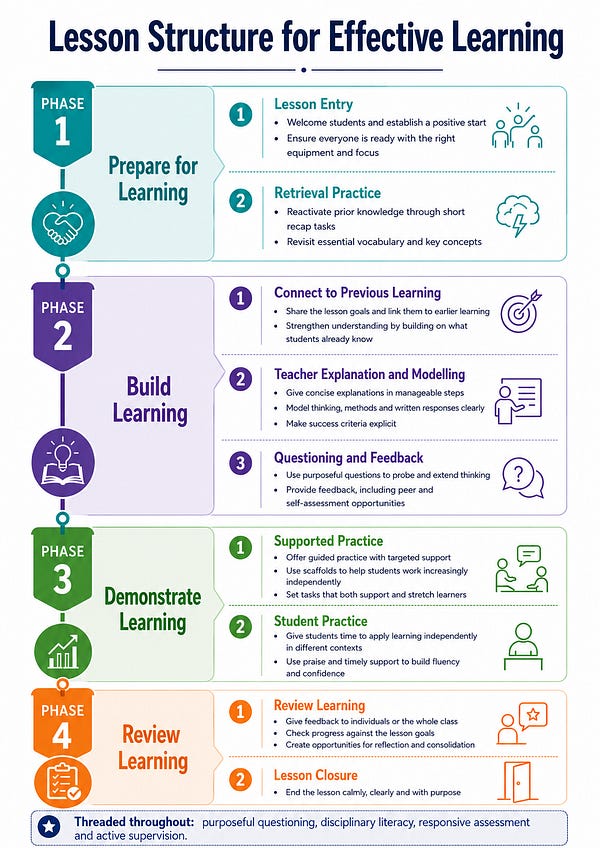
Haili Hughes · Substack · 2026 · Australia
Hughes explains how well-meant whole-school lesson structures built from cognitive science can become rigid checklists, and why subject knowledge and teacher judgement must shape how principles are used.
Instructional leadershipImplementationExplicit instruction
Jamie ClarkJamie Clark · Blog post · 2024 · Australia
A school leader's five ingredients for embedding research in a school, from shared understanding and how learning happens to trust, context-specific professional learning and curated strategies.
Instructional leadershipInstructional coaching and professional learning
Teacher magazine (ACER)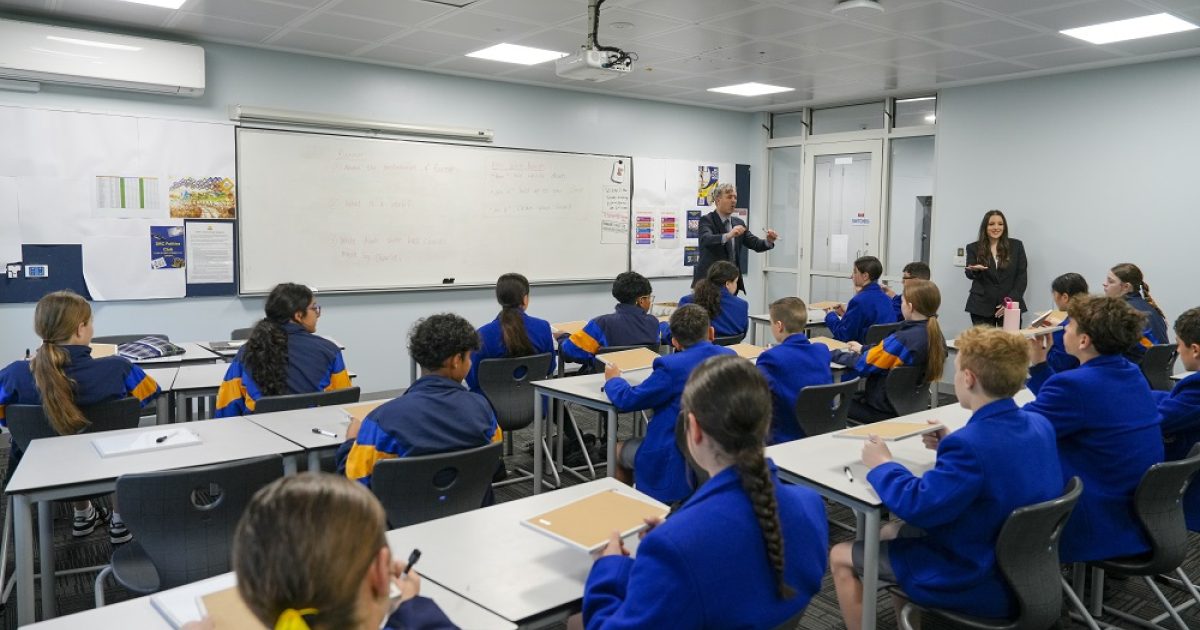
Teacher magazine (ACER) · Interview · Australia
Instructional leadershipSchool culture, trust and behaviour
Dr Nathaniel Swain
Nathaniel Swain · Substack · 2026 · Australia
A follow-up on culture of error that turns to whole-school consistency. Swain discusses phasing in change, no opt out with support, and the difference between collaboration and mere co-operation among staff.
School culture, trust and behaviourTeams, middle leadership and professional cultureClassroom culture, routines and attention
Doug Lemov's Field NotesDoug Lemov (Doug Lemov's Field Notes) · Substack · 2026 · USA
Lemov recommends George Bonanno's research on resilience and cautions that loose use of the words trauma and trauma-informed in schools can lead to well-meant but counterproductive responses.
School culture, trust and behaviourEvidence, myths and debates
Dr Haili Hughes
Haili Hughes · Substack · 2026 · Australia
Prompted by a Victorian primary principal's talk, Hughes examines how the phrase "our kids can't" lowers expectations, and how explicit, systematic teaching makes ambitious goals reachable for all students.
School culture, trust and behaviourInstructional leadershipTiered support and inclusion
Kylie HoeyKylie Hoey · Substack · 2026 · Australia
Questions behaviour supports that end up rewarding disruption, and argues for clear school systems that hold high expectations while still caring for students.
School culture, trust and behaviourClassroom culture, routines and attention
Dr Haili HughesHaili Hughes · Substack · 2026 · Australia
Hughes argues that staff wellbeing comes less from treats and gestures than from manageable workloads, clear systems, purposeful professional development and a culture that takes teachers' growth seriously.
Teams, middle leadership and professional cultureInstructional coaching and professional learning
InnerDrive
InnerDrive · Blog summary · UK
Implementation
AEROAERO · Explainers and papers · Australia
Implementation
AERO
AERO · Explainer · Australia
Implementation
Teacher magazine (ACER)
Teacher magazine (ACER) · Article · Australia
Implementation
AERO
AERO · Discussion paper · Australia
Implementation
Tom Sherrington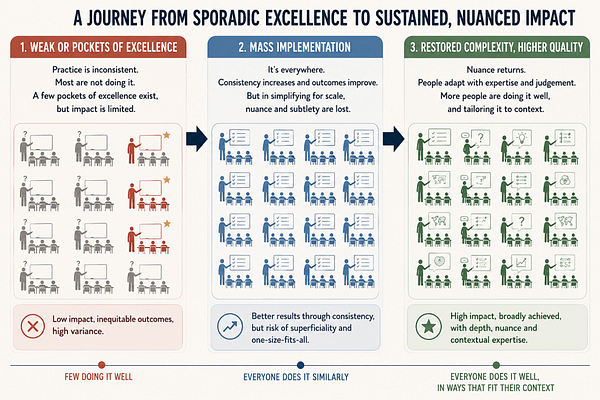
Tom Sherrington · Substack · 2026 · UK
Sherrington describes a predictable pattern when ideas such as retrieval practice spread, from scattered pockets to mass adoption that loses nuance, then to deeper, better practice, and why leaders should expect it.
ImplementationChange management
AERO
AERO · Explainers and papers · 2024 · Australia
Implementation
On Education
Rebecca Birch (On Education) · Substack · 2025 · Australia
Birch welcomes Australia's shift towards explicit teaching but names five risks to the reform, including rushed rollout, thin resources and unclear messaging, and how leaders can avoid another pendulum swing.
ImplementationChange managementInstructional leadership
Dr Haili Hughes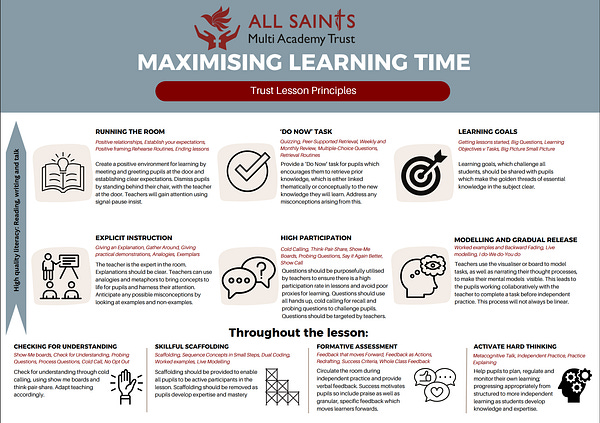
Haili Hughes · Substack · 2026 · Australia
Hughes reflects on a year implementing research-informed lesson principles across a trust, sharing what helps principles move from a published document to consistent, thoughtful practice in classrooms.
ImplementationInstructional leadershipInstructional coaching and professional learning
The Curriculum Insight Project
Karen Vaites (The Curriculum Insight Project) · Substack · 2025 · USA
Vaites argues that science of reading discussions overlook how much time each component of literacy actually gets, and why well-designed curriculum matters for getting the balance right.
ImplementationPhonics
AERO
AERO · Explainer · Australia
Second of five AERO explainers. Sets out the stages a school moves through when adopting an evidence-based practice, so leaders can judge where they are and plan next steps.
Implementation
AERO
AERO · Explainer · Australia
Third of five AERO explainers. Shows leaders how to identify the local conditions that will help or hinder a new practice, and why to deal with them early.
Implementation
AERO
AERO · Explainer · Australia
Fourth of five AERO explainers. Helps leadership teams choose and prioritise the actions that support staff to take up a practice, matched to their own barriers and enablers.
Implementation
AERO
AERO · Explainer · Australia
Fifth of five AERO explainers. Describes which implementation outcomes to track, how to gather the data, and how to use it to check a practice is being used well.
Implementation
On Education
Rebecca Birch (On Education) · Substack · 2024 · Australia
Change management
Learning ForwardLearning Forward · Tool · USA
Change management
Dr Haili HughesHaili Hughes · Substack · 2026 · Australia
Hughes reflects on the hostility in Australia's debates about explicit teaching and the science of reading, linking it to teacher identity and suggesting how leaders can help teachers reconsider practice.
Change managementEvidence, myths and debatesInstructional leadership
Paul KirschnerPaul Kirschner · Substack · 2026 · International
Kirschner outlines ten classroom practices that look effective but are not, such as busy engagement and motivation first, and explains what the research suggests teachers do instead.
Evidence, myths and debatesExplicit instructionHow learning happens
The Learning Dispatch
Carl Hendrick (The Learning Dispatch) · Monthly research round-up · 2026 · UK
Evidence, myths and debates
The Learning Dispatch
Carl Hendrick (The Learning Dispatch) · Substack · 2025 · UK
Hendrick answers common criticisms of the science of learning, such as claims it is dogma or de-skills teachers, and sets out the research base and the equity case for it.
Evidence, myths and debatesHow learning happens
Shanker InstituteShanker Institute · Blog post · USA
Evidence, myths and debates
The Hechinger ReportThe Hechinger Report · News analysis · USA
Evidence, myths and debates
Filling the Pail
Greg Ashman (Filling the Pail) · Substack · 2021 · Australia
Ashman discusses a paper drawing parallels between Universal Design for Learning and learning styles, and raises concerns about its evidence base, its planning workload and its spread into policy.
Evidence, myths and debatesTiered support and inclusion
Dr Haili Hughes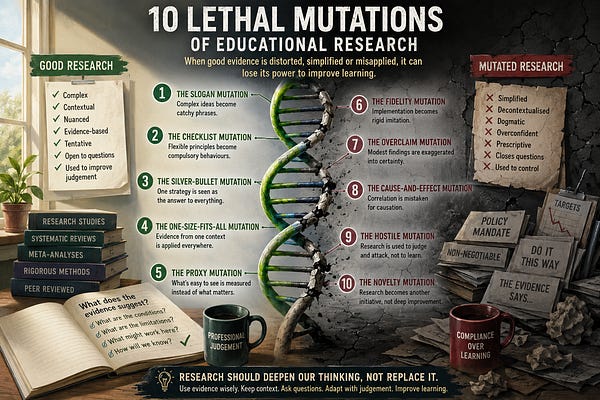
Haili Hughes · Substack · 2026 · Australia
Hughes names ten ways research gets distorted on its way into schools, such as slogans and rigid rules, and suggests how leaders can keep the nuance of the original evidence.
Evidence, myths and debatesImplementationInstructional coaching and professional learning
Daniel WillinghamDaniel Willingham · Substack · 2026 · USA
Willingham notes that Season 1 of Sold a Story disputed methods for a shared goal, while the newer debate over Direct Instruction is partly about what schooling is for.
Evidence, myths and debatesExplicit instruction
The Learning Dispatch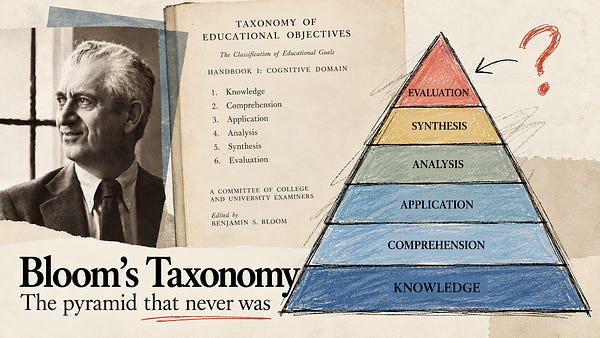
Carl Hendrick (The Learning Dispatch) · Substack · 2026 · UK
A history of how a 1956 handbook for classifying exam questions became a pyramid that ranks thinking above knowledge, and why that reading misleads curriculum and lesson planning.
Evidence, myths and debatesKnowledge-rich curriculum and coherence
Paul Kirschner
Paul Kirschner · Substack · 2025 · International
Kirschner sets out ten psychological, ideological and practical reasons discovery learning stays popular even though the research favours guided, explicit teaching for novices. Useful for staff conversations about pedagogy.
Evidence, myths and debatesExplicit instruction
The Learning Dispatch
Carl Hendrick (The Learning Dispatch) · Substack · 2025 · UK
Hendrick traces how translations and selective readings turned Vygotsky into a champion of discovery learning, and argues his own work placed far more weight on teaching systematic, scientific concepts.
Evidence, myths and debatesHow learning happens