Learning difficulties, disorders and additional needs
Some students keep finding reading, writing, maths or language hard, even when the teaching is good. I've gathered webinars, short videos, guides and research here to help you understand why, and what strong support looks like at Tier 1, Tier 2 and Tier 3. You'll also find webinars and guides, most of them Australian, on supporting students with ADHD, autistic students and other students with additional needs.
Practices in this area:Early identificationEvidence-based interventionReasonable adjustmentsIndividual Education PlansWorking with specialists and support staff
These resources are here to support your teaching. They are not a substitute for assessment or advice from a qualified professional, such as a psychologist, paediatrician or speech pathologist.
Understanding learning difficulties 10
What learning difficulties and specific learning disorders are, how schools notice them through tiered support, and what reasonable adjustments look like. For screening, intervention and the tiers across a whole school, see Tiered support and inclusion.
Queensland Curriculum and Assessment Authority · 6:09 · Australia
A short Queensland Curriculum and Assessment Authority video on supporting students through reasonable adjustments. A handy opener for a staff conversation about what an adjustment is.
Learning Difficulties Australia, with Kate Jacobs · About 1 hour 10 minutes · Australia
A Learning Difficulties Australia session with Dr Kate Jacobs on specific learning disorders. A possible starting point before looking at each disorder in turn.
Learning Difficulties Australia, with Sarah Asome · About 55 minutes · Australia
Victorian school leader Sarah Asome presents on response to intervention for Learning Difficulties Australia. Useful for teams building or reviewing their own tiers of support.
AERO's explainer sets out the features of a multi-tiered system of supports and what each tier involves, from strong classroom teaching to intensive help. Written for Years 7 to 9 but useful to any school.
Department of Education, Victoria · Guides and explainers · Australia
The Victorian department's overview of learning difficulties for teachers, covering possible signs, whole-school approaches, and links to its information guides on literacy difficulties, including dyslexia and dysgraphia, and numeracy difficulties, including dyscalculia.
SPELD Victoria · Guides and explainers · Australia
SPELD Victoria explains how a specific learning disorder differs from broader learning difficulties, why the impact on learning matters most, and what support the organisation offers Victorian teachers and schools.
A free online guide from AUSPELD that gives parents and carers current information about learning disabilities in children. Worth knowing so you can point families to something trustworthy.
Carl Hendrick (The Learning Dispatch) · Substack · 2025 · UK
Hendrick discusses a computational study suggesting students with ADHD and dyslexia face distinct extra costs in unguided learning, and why clear, explicit guidance matters even more for them.
AERO (Kate de Bruin and colleagues) · 2023 · Research report
An AERO review of reviews on helping Years 7 to 9 students who are well behind in literacy and numeracy. It finds good grounds for multi-tiered support and looks at screening, progress monitoring and interventions.
A What Works Clearinghouse practice guide with five recommendations for finding struggling readers early and giving them tiered, evidence-based support in the primary years.
A short video from Australia's DLD Project on why rich vocabulary teaching is hard for children with developmental language disorder. Relevant to anyone planning vocabulary lessons.
A short RADLD video explaining the consensus behind the term developmental language disorder. Helpful if older reports at your school still use other labels.
Reading Universe, with Tiffany Hogan · About 35 minutes · USA
Researcher Tiffany Hogan on developmental language disorder, in a session for Reading Universe. A manageable length for teachers who are new to the topic.
Speech Pathology Tasmania · About 1 hour · Australia
A session from Speech Pathology Tasmania on understanding developmental language disorder and dysgraphia together, from an Australian speech pathology point of view.
RADLD's fact sheet on developmental language disorder, from the international group that raises awareness of the condition. A short page to share with colleagues and families.
Bishop, Snowling, Thompson, Greenhalgh and the CATALISE consortium · 2016 · Consensus study
The open-access consensus study in which an international expert panel worked towards agreed criteria for identifying children's language difficulties. It underpins the shift to the term developmental language disorder.
The Talking DLD Podcast (The DLD Project) · Australia
An episode of the Australian Talking DLD Podcast about school for children with developmental language disorder, and what it is like to watch a child struggle there.
The Talking DLD Podcast (The DLD Project) · Australia
This Talking DLD Podcast episode explains why children with developmental language disorder are at higher risk of reading and spelling difficulty, and shares phonics strategies that help.
Macquarie University Centre for Reading · About 50 minutes · Australia
A Macquarie University Centre for Reading seminar asking why children who struggle with reading are more likely to have emotional difficulties. A reminder to watch wellbeing alongside intervention.
National Center on Improving Literacy · About 55 minutes · USA
A National Center on Improving Literacy session explaining the International Dyslexia Association's updated definition of dyslexia. Good for leaders who need to keep school documents current.
The Windward Institute, with Hugh Catts · About 1 hour 20 minutes · USA
Researcher Hugh Catts presents for the Windward Institute on identifying dyslexia early. Relevant to Foundation and Year 1 teams and anyone responsible for screening.
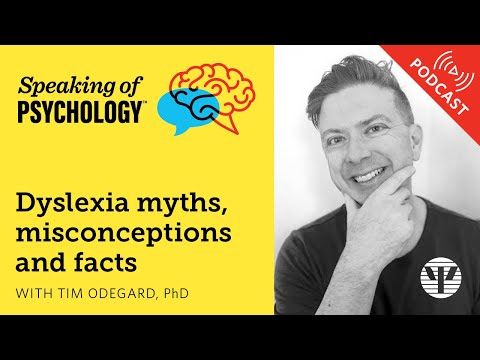
Speaking of Psychology (American Psychological Association), with Tim Odegard · About 35 minutes · USA
The American Psychological Association's podcast Speaking of Psychology talks with researcher Tim Odegard about myths, misconceptions and facts about dyslexia. This is the video recording of the episode.
Understood's video takes you inside a dyslexia intervention session. Handy for staff who have never watched specialist reading intervention being taught.
International Dyslexia Association · Definition · 2025 · USA
The International Dyslexia Association's current definition, adopted in October 2025. It describes dyslexia as difficulty with accurate or fluent word reading and spelling that sits on a continuum and persists despite effective teaching.
Takes apart common beliefs about dyslexia, such as letter reversals and visual causes, and explains what research shows about its language-based roots and why the myths matter.
After her daughter's late dyslexia diagnosis despite strong standardised scores, the author lists signs teachers can watch for in reading, spelling and writing that test scores can miss.
Snowling, Hulme and Nation · 2020 · Review article
An open-access review that describes dyslexia as a difficulty in learning to decode and spell, places it among the neurodevelopmental disorders, and traces how understanding of it has changed.
A What Works Clearinghouse practice guide on reading interventions for students in the upper primary and lower secondary years. One for leaders planning support for older struggling readers.
Think Forward Educators, with Tessa Daffern · 30 to 60 minutes · 2024 · Australia
Tessa Daffern explains why spelling needs a nuanced approach to explicit instruction and how a multi-tiered system of support for spelling can work from Foundation to early secondary.
Free account neededOpens at thinkforwardeducators.org
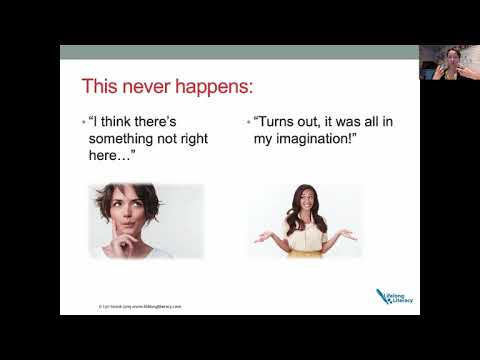
A webinar from Australian linguist Lyn Stone, made for parents who want to know more about dyslexia and dysgraphia. Clear enough for teachers too, and one to pass on to families.
Learning Difficulties Australia, with Alison Clarke · About 1 hour · Australia
Melbourne speech pathologist Alison Clarke presents on spelling for Learning Difficulties Australia. Relevant to anyone supporting students whose spelling lags behind their reading.
Five from Five, with Alison Madelaine · About 1 hour · Australia
Dr Alison Madelaine's guest presentation for Five from Five on rethinking classroom spelling teaching. Strong Tier 1 spelling is the first support for students with written expression difficulties.
An Iowa Reading Research Center webinar on teaching and assessing handwriting using evidence. Helpful for schools without an agreed way to check handwriting fluency.
Reading Rockets, with Steve Graham · About 40 minutes · USA
A Reading Rockets video with writing researcher Steve Graham on effective writing teaching. Pairs well with the Karen Harris podcast episode on self-regulated strategy development on the Listen shelf.
Thinking Deeply about Primary Education · About 50 minutes · UK
An episode of the UK podcast Thinking Deeply about Primary Education on why handwriting is hard to teach well and what teachers can do about it. This is the video recording of the episode.
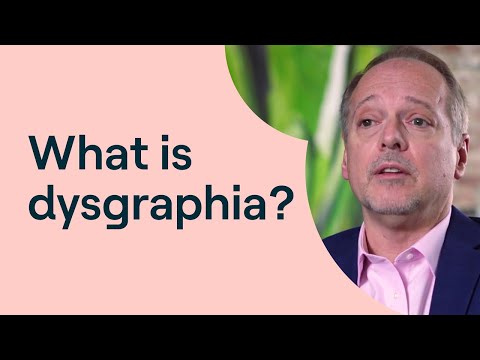
Understood's article describes dysgraphia as a writing challenge that affects skills such as handwriting, typing and spelling, and explains how it can affect learning.
A What Works Clearinghouse practice guide with four recommendations for improving primary students' writing, each with steps for putting it in place and answers to common obstacles.
Numerical Cognition Laboratory, Western University, with Daniel Ansari · 5:00 · Canada
Professor Daniel Ansari of Western University explains what developmental dyscalculia is in five minutes. A good first watch before his longer webinar.
Think Forward Educators, with Sarah Powell · 30 to 60 minutes · 2023 · USA
Sarah Powell outlines five evidence-based practices for students who find maths hard, namely modelling and practice, vocabulary, multiple representations, fluency building and word problem solving.
Free account neededOpens at thinkforwardeducators.org
Think Forward Educators, with Nathalie Parry · 30 to 60 minutes · 2023 · Australia
Nathalie Parry helps educators understand, identify and support students with maths learning difficulties, including dyscalculia, and explains why early identification matters.
Free account neededOpens at thinkforwardeducators.org
LD@school, with Daniel Ansari · About 1 hour 10 minutes · Canada
Professor Daniel Ansari's webinar for Canada's LD@school explains developmental dyscalculia, a specific learning disability affecting maths in about five per cent of children. The page includes a transcript.
National Center on Intensive Intervention · Series · Eight modules · USA
Eight free training modules from the National Center on Intensive Intervention on delivering intensive maths intervention and adjusting it using student data. Suited to interventionists and maths leaders.
Department of Education, Victoria · Guide · 2022 · Australia
Victoria's guide for teachers on numeracy difficulties, including dyscalculia. It explains core number abilities, a three-phase assessment process and intervention across the response to intervention tiers.
National Center on Intensive Intervention · Guides and explainers · USA
A short guide from the National Center on Intensive Intervention explaining key practices to use when teaching students who need intensive maths intervention.
What Works Clearinghouse (Fuchs and colleagues) · 2021 · Practice guide · USA
A What Works Clearinghouse practice guide with six recommendations for maths intervention in the primary years, from systematic instruction and mathematical language to number lines, word problems and timed fluency activities.
Cognitive neuroscientist Daniel Ansari explains what young children need to understand about numbers and why some students struggle with maths from the start.
Dyscalculia specialist Cat Eadle explains what dyscalculia is, how it differs from other maths difficulties, and how mastery-style teaching can help. A short listen of a little over twenty minutes.
These are the webinars and guides I'd share with a teacher who wants to understand attention and motivation, and to set up a calm classroom where students with ADHD can do well. A few are made for families, and say so.
Wolfson Centre for Young People's Mental Health, with Joanna Martin · About 50 minutes · UK
Dr Joanna Martin of Cardiff University on the early signs of ADHD in primary school children, how it can look different in girls and boys, what to do when you have concerns and how schools can help.
ADHD Australia, with Rebecca McLinden · About 35 minutes · Australia
Behaviour analyst Rebecca McLinden, speaking for ADHD Australia, on how ADHD affects the way rewards work, and why motivation and consistency can be hard to keep up.
ADHD Australia, with Monique Mitchelson · About 45 minutes · Australia
Monique Mitchelson's talk for ADHD Australia's Global ADHD Conference on ADHD and co-occurring autism. Helpful background when a student's profile does not fit one label neatly.
Kelty Mental Health Resource Centre · About 1 hour · Canada
A webinar for parents from Canada's Kelty Mental Health Resource Centre on how ADHD affects learning and how to support a child at school. Useful for seeing school through a family's eyes. Some of the advice is specific to British Columbia.
Raising Children Network · About 1 hour · Australia
A recorded webinar on ADHD in children and teenagers from the Raising Children Network, the Australian parenting website. Worth knowing about when a family asks you where to start.
AllPlay Learn, Monash University · Teacher guide · Australia
A plain guide for primary teachers covering what ADHD is, the strengths these students bring, evidence-based strategies, best practice tips and points to consider across the curriculum.
Australasian ADHD Professionals Association (Kim Fuller) · Fact sheet · Australia
A short fact sheet from the body behind Australia's ADHD clinical guideline. It explains why educators need to recognise possible ADHD and support students from preschool onwards.
The Royal Children's Hospital Melbourne · Fact sheet · Australia
The Royal Children's Hospital's fact sheet for families on supporting a child with ADHD at school and at home. Handy to share with parents so everyone is working from the same advice.
Flynn Vamos and Melanie Porter, for ADHD Australia · Article · Australia
Two psychology researchers report what Australian primary teachers told them about including students with ADHD, which teachers described as the blind spot of inclusion.
Australasian ADHD Professionals Association (Kim Fuller) · Fact sheet · Australia
Examples of common reasonable adjustments for students with ADHD, tied to the Disability Standards for Education. It also notes when anxiety or autism alongside ADHD may call for more.
Australasian ADHD Professionals Association · Clinical guideline · 2022 · Australia
The national guideline for identifying, diagnosing and supporting people with ADHD, approved by the NHMRC. Written for clinicians, and worth knowing as the reference point behind advice schools receive.
Here you'll find webinars and classroom guides, most of them Australian, on communication, sensory needs, visual schedules and transitions, with autistic voices alongside the research.
Department of Education, Victoria · Case study with video · About 3 minutes · Australia
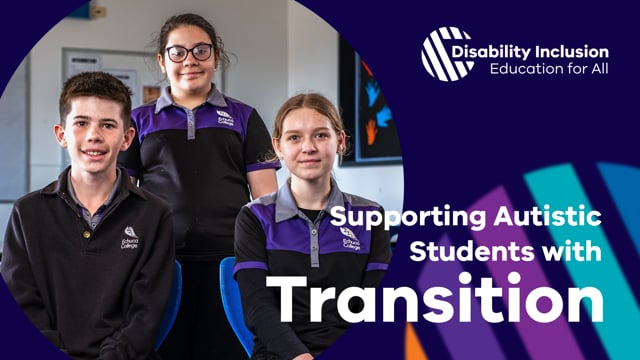
A Victorian case study with short videos showing how Echuca College built a transition program with its feeder primary schools so new Year 7 students, including autistic students, start well.
Positive Partnerships · About 45 minutes · 2026 · Australia
A recorded webinar on planning, shifting attention, flexible thinking and self-regulation in young autistic people, with slides, a strategy list for home and school and a planning template.
inclusionED (Sylvia Rodger Institute) · About 1 hour · Australia
The first episode of inclusionED's webinar series The Inclusive Classroom. It introduces neurodiversity and autism and offers classroom strategies, from sensory needs to building on students' strengths and interests.
inclusionED (Sylvia Rodger Institute) · About 50 minutes · Australia
The third episode of inclusionED's webinar series explains sensory seeking and sensory avoiding, and how being more or less sensitive to what is going on in a classroom affects students.
Yellow Ladybugs, with the Victorian Government · About 2 hours 10 minutes · 2019 · Australia
A recorded panel from Yellow Ladybugs and the Victorian Government. Panellists share their own experience of six areas that often challenge autistic girls at school, including hidden anxiety, peer relationships and class rules.
A shortened version of the Autism Education Trust's Making Sense of Autism training, made to help education staff understand autism better, with ideas for support in the classroom and at home.
Aspect (Autism Spectrum Australia) · About 40 minutes · 2026 · Australia
An episode of Aspect's podcast A Different Brilliant on what dysregulation is, what can contribute to it and how adults can support an autistic person who is overwhelmed. This is the video recording of the episode.
Positive Partnerships · Two sessions of about 45 minutes · 2026 · Australia
Two recorded webinars on the different ways autistic people communicate, being a good communication partner and extending two-way interaction, with slides and a planning tool.
inclusionED · Practice guide with video · Australia
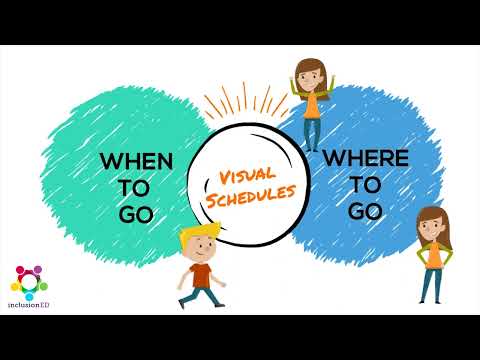
A step-by-step practice guide with classroom video on using visual schedules so students know what is coming, move between tasks smoothly and need fewer verbal prompts.
Yellow Ladybugs, with the Department of Education, Victoria · Website guide · Australia
A website guide to supporting autistic girls and gender-diverse students, covering masking, hidden anxiety, peer relationships, group work, executive functioning and class rules.
Amaze's tip sheet for Year 6 teachers on writing a transition plan with the student, the family and the secondary school before an autistic student moves on.
Department of Education, Victoria · Resource page · Australia
The Victorian department's collection of guidance for schools on autistic students, linking to the Autism Education Strategy, transition tip sheets, behaviour support tools and partner organisations.
AllPlay Learn, Monash University · Teacher guide · Australia
A guide for primary teachers that sets out what autism is, the strengths autistic students bring, evidence-based strategies, best practice tips and curriculum considerations.
I've gathered the practical things here, including what the Disability Standards ask of us, how to plan adjustments and Individual Education Plans, and how to work well with education support staff.
Education Endowment Foundation · About 2 minutes · UK
A two-minute Education Endowment Foundation explainer of its 'five-a-day' principle, a set of five core practices that help all pupils succeed, including those with special educational needs. A quick opener for a staff meeting on Tier 1 teaching.
Think Forward Educators, with Charlotte Peverett · About 1 hour · 2026 · Australia
Charlotte Peverett explains what Tier 1, 2 and 3 look like in specialist settings and which practices give the most benefit for students in those schools.
Think Forward Educators, with Bree Jimenez · 30 to 60 minutes · 2024 · USA
Bree Jimenez presents research on including students with complex learning needs in age-aligned maths lessons through personalised supports, explicit early numeracy teaching and embedded systematic instruction.
Free account neededOpens at thinkforwardeducators.org
Evidence for Learning · About 1 hour · 2020 · Australia
An Evidence for Learning webinar with practical, evidence-based advice on getting the most from teaching assistants in primary and secondary schools. It builds on Evidence for Learning's guidance report on the same topic.
Be You (Beyond Blue) · About 40 minutes · Australia
A recorded Be You session on how to support neurodiversity and disability inclusion in school communities. Be You is the national mental health in education initiative led by Beyond Blue.
Dr Kate de Bruin's short presentation, recorded for the ACT Inclusive Education Community of Practice, on why schools should move to a multi-tiered system of supports.
inclusionED (Sylvia Rodger Institute) · About 50 minutes · Australia
The fourth episode of inclusionED's webinar series, on foundation practices for early career teachers. It also introduces the professional learning and community of practice on the inclusionED website.
The School Can't Experience Podcast, with Linda Graham · About 50 minutes · Australia
Professor Linda Graham, Director of the QUT Centre for Inclusive Education, talks with host Leisa Reichelt about teaching and assessment that every student can access, and what the Disability Standards ask of schools. This is the video recording of the podcast episode.
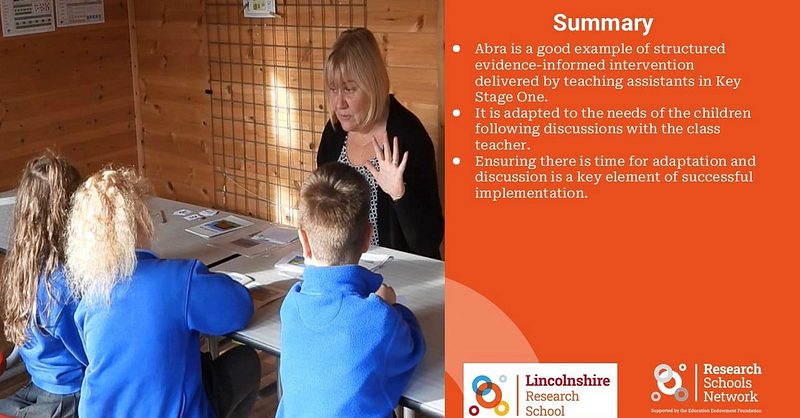
Teaching assistants deliver a structured early reading intervention, ABRACADABRA, to Year 1 pupils in a UK school, adapting sessions to revisit the sounds children need more practice with.
Department of Education, Victoria · Policy and guidance · Australia
The Victorian government school policy on Individual Education Plans. It sets out which students must have one, reminds schools of their duty to make reasonable adjustments, and links to guidance and templates.
Education Endowment Foundation · Guidance report · UK
The Education Endowment Foundation's guidance report gives five evidence-based recommendations for supporting pupils with additional needs in mainstream classrooms, with high quality everyday teaching at the centre.
inclusionED, with Elizabeth Dickson · Practice series · Australia
An introduction to the Disability Discrimination Act and the Disability Standards for Education, written with education law expert Professor Elizabeth Dickson. Covers educators' obligations, discrimination, harassment and victimisation.
AITSL's collection of elaborations and videos showing how the Disability Standards for Education connect to the Teacher Standards and what they ask of teachers and leaders.
Australian Government Department of Education · Government resource page · Australia
The Australian Government's home for the Standards, with fact sheets, exemplars of practice and the national guide to planning personalised learning and support.
Rebecca Birch (On Education) · Substack · 2026 · Australia
Birch argues that inclusive teaching should build on the needs students share, such as clear explanation, predictability and guided practice, rather than treating a growing group of students as individual adjustments.
Department of Education, Victoria · Policy and guidance · Australia
The Victorian policy on Student Support Groups, the meeting of school, family and others that plans support for a student with disability or diverse learning needs.
Evidence for Learning · Guidance report · 2019 · Australia
Seven recommendations to help principals and leadership teams in primary and secondary schools make the best use of teaching assistants. The full report and a one-page poster are free to download.
Charlotte Peverett, a learning specialist and inclusion outreach coach, discusses structures, routines and holding high expectations for all students, including diverse learners.
Alex Quigley and Kirsten Mould discuss the EEF's updated guidance on deploying teaching assistants, with Gary Aubin and practitioners reflecting on what works in their settings.
Alex Quigley, Kirsten Mould and guests including Gary Aubin discuss how best to support pupils with special educational needs in mainstream classrooms.
A three-minute Education Endowment Foundation video on supporting working memory in the primary classroom. Short enough to watch and discuss in a team meeting.
National Council for Special Education (Ireland) · 5:01 · International
A five-minute introduction to developmental coordination disorder from Ireland's National Council for Special Education. A quick primer for classroom teachers.
Cambridge University Press ELT, with Joni Holmes · About 50 minutes · UK
Researcher Joni Holmes speaks on working memory and classroom learning. Relevant across this section, because many students with learning difficulties also find it hard to hold information in mind.
Association for Child and Adolescent Mental Health, with Amanda Kirby · About 35 minutes · UK
Professor Amanda Kirby speaks for the Association for Child and Adolescent Mental Health about developmental coordination disorder, which often shows up at school in handwriting and organisation. Made for clinicians, so heavier going than the short video in this strand.
Susan Gathercole and Tracy Packiam Alloway · Guide · 2007 · UK
A classroom guide to working memory by researchers Susan Gathercole and Tracy Packiam Alloway, hosted by the University of Cambridge. Older, but still a well-known introduction for teachers.


 Carl Hendrick (The Learning Dispatch) · Substack · 2025 · UK






 Jen O'Sullivan · Substack · 2025 · International













 Rebecca Birch (On Education) · Substack · 2026 · Australia