Center on PBIS
School story
Center on PBIS · 11:46 · F-12 · USA
A Center on PBIS video of a school team using TIPS (Team-Initiated Problem Solving) in a Tier 2 and 3 coordination meeting. Useful for seeing a structured team meeting modelled.
Think Forward Educators, with Stephanie Stollar
Webinar
Think Forward Educators, with Stephanie Stollar · 30 to 60 minutes · 2026 · USA
Stephanie Stollar tackles three common misunderstandings about Tier 1 reading instruction and shows how screening, diagnostic and progress data can shape core teaching that reduces risk.
Think Forward Educators, with Brad Nguyen, Docklands Primary School
Webinar
Think Forward Educators, with Brad Nguyen, Docklands Primary School · About 1 hour · 2025 · Australia
Brad Nguyen explains how Docklands Primary uses the Acadience Math universal screener, what the assessment involves and how the results inform support and school improvement.
Think Forward Educators, with Sacha Giurietto and Reid Smith
Webinar
Think Forward Educators, with Sacha Giurietto and Reid Smith · About 1 hour · 2025 · Australia
Sacha Giurietto and Reid Smith explain how to set up a whole-school assessment system and run data meetings that lead to changes in teaching.
Think Forward Educators, with Amanda VanDerHeyden
Webinar
Think Forward Educators, with Amanda VanDerHeyden · 30 to 60 minutes · 2026 · USA
Dr Amanda VanDerHeyden reflects on two decades of MTSS, why results vary so widely between schools and how aligning data, instruction and decisions improves impact.
Think Forward Educators, with Sarah Asome, Steve Capp and Kate Buck
Webinar
Think Forward Educators, with Sarah Asome, Steve Capp and Kate Buck · 30 to 60 minutes · 2023 · Australia
Leaders from Bentleigh West, Chelsea Heights and Brandon Park primary schools explain how they assess and report on reading and maths without benchmark levels or running records.
Think Forward Educators, with Karen Woods, Templestowe Heights Primary School
Webinar
Think Forward Educators, with Karen Woods, Templestowe Heights Primary School · 30 to 60 minutes · 2024 · Australia
Karen Woods explains how she hears students read without benchmarking kits, moving from book groups to shared, choral and paired reading, with the classroom norms that make it work.
Branching Minds, with Amanda VanDerHeyden
Talk
Branching Minds, with Amanda VanDerHeyden · About 1 hour · USA
Amanda VanDerHeyden's keynote on lessons learned from 15 years of multi-tiered systems of support, hosted by Branching Minds. Useful for leaders reviewing their own MTSS.
Learning Difficulties Australia, with Kate Jacobs
Webinar
Learning Difficulties Australia, with Kate Jacobs · About 1 hour 10 minutes · Australia
A Learning Difficulties Australia session with Dr Kate Jacobs on specific learning disorders. A possible starting point before looking at each disorder in turn.
Learning Difficulties Australia, with Sarah Asome
Webinar
Learning Difficulties Australia, with Sarah Asome · About 55 minutes · Australia
Victorian school leader Sarah Asome presents on response to intervention for Learning Difficulties Australia. Useful for teams building or reviewing their own tiers of support.
The Windward Institute, with Hugh Catts
Webinar
The Windward Institute, with Hugh Catts · About 1 hour 20 minutes · USA
Researcher Hugh Catts presents for the Windward Institute on identifying dyslexia early. Relevant to Foundation and Year 1 teams and anyone responsible for screening.
Iowa Reading Research Center
Webinar
Iowa Reading Research Center · About 1 hour · USA
An Iowa Reading Research Center webinar on teaching and assessing handwriting using evidence. Helpful for schools without an agreed way to check handwriting fluency.
National Center on Intensive InterventionSeries
National Center on Intensive Intervention · Series · Eight modules · USA
Eight free training modules from the National Center on Intensive Intervention on delivering intensive maths intervention and adjusting it using student data. Suited to interventionists and maths leaders.
Learning Difficulties Australia, with Tessa Daffern
Webinar
Learning Difficulties Australia, with Tessa Daffern · About 1 hour 10 minutes · Australia
Tessa Daffern presents for Learning Difficulties Australia on using assessment to guide the teaching of spelling.
Five from FiveExplainer
Five from Five · 1:44 · Australia
A short animation on what the five-minute Year 1 Phonics Check is and what it tells schools about early decoding.
AERO
School story
AERO · 2:43 · Secondary · Australia
Staff at a Ballarat secondary college explain why they adopted a multi-tiered system of supports, how the tiers work in practice and what has changed.
NSW Department of Education
Interview
NSW Department of Education · 13:50 · Primary · Australia
The principal and curriculum leader of a small Blue Mountains primary school explain their shared assessment schedule and how results feed into teaching.
Dylan Wiliam
Talk
Dylan Wiliam · About 40 minutes · 2025 · UK
Dylan Wiliam's talk from researchED Madrid 2025, arguing that assessment for learning is more than formative assessment. Useful for teams reviewing how they use assessment.
Think Forward Educators, with Daisy Christodoulou
Webinar
Think Forward Educators, with Daisy Christodoulou · 30 to 60 minutes · 2024 · UK
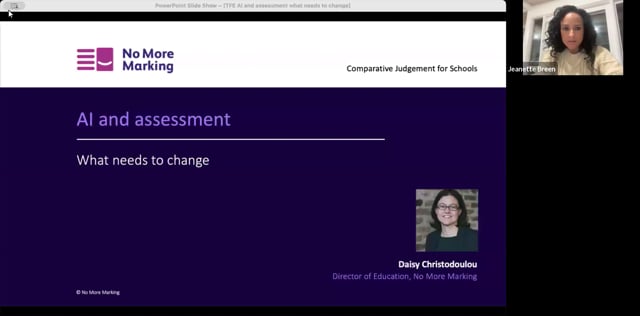
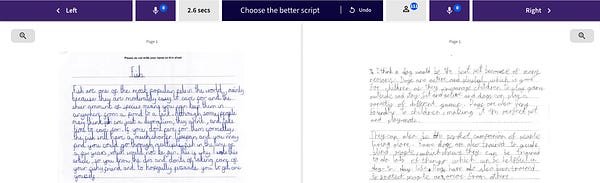
Daisy Christodoulou shares what No More Marking has learned from comparative judgement of more than two million pieces of student writing, and how teachers can use those insights.
AERO
Interview
AERO · 4:35 · Secondary · Australia
Teachers and leaders from five schools show how they timetable intervention and decide how intensive each student's support should be.



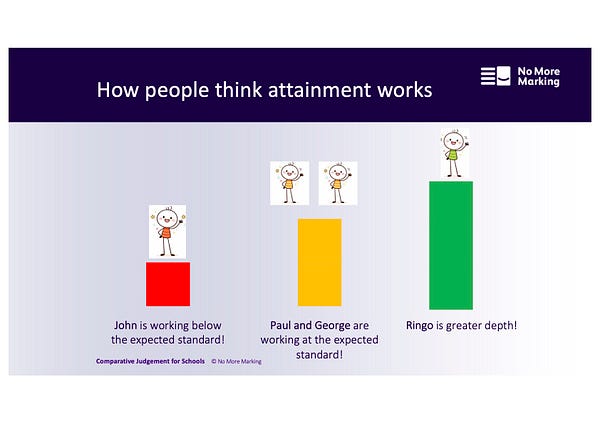
 Daisy Christodoulou (No More Marking) · Substack · 2025 · UK


 Harriett Janetos (Making Words Make Sense) · Substack · 2026 · USA

 Jen O'Sullivan · Substack · 2026 · International
 Kylie Hoey · Substack · 2026 · Australia

 Alex Blanksby (VIC Maths Notes) · Substack · 2026 · Australia